Date:
March 31, 2026
By admin
Categories:
Uncategorized

War risk premiums have surged, and seafarers are stranded in a conflict zone. We break down what the Hormuz crisis means for UK shipping and logistics
The Strait of Hormuz has always been one of the most important strategic points in global trade. Roughly a fifth of the world’s oil supply and a large share of global gas shipments pass through this channel, supplying nations and keeping fuel prices down. When it functions normally, most of the world barely notices. When it does not, the consequences are rapid, wide-reaching and costly.
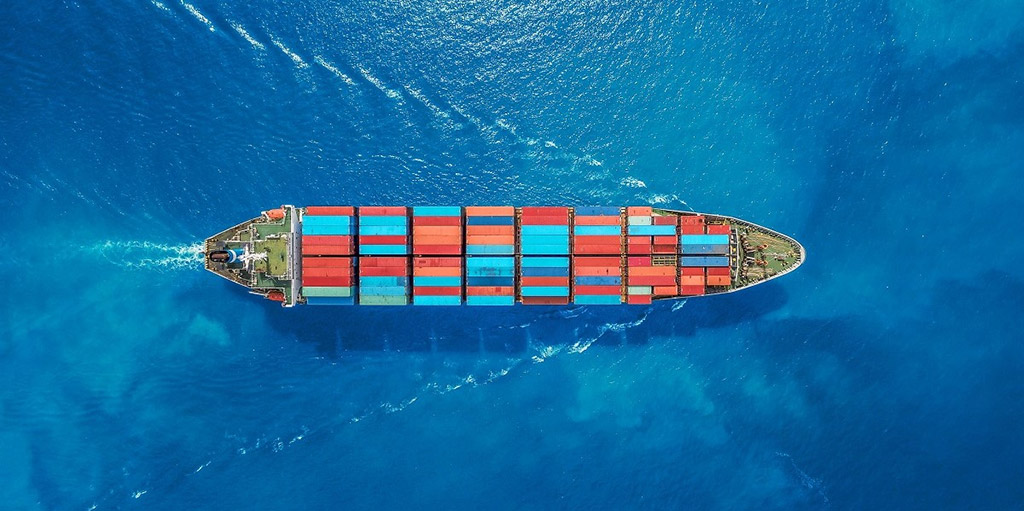
Following US and Israeli military strikes on Iran in late February 2026, Iran declared the strait effectively closed to vessels from Western-allied nations. Commercial traffic has collapsed. Around 150 vessels are currently stranded around the strait, according to Andrew Briant, CEO of Crewsure, writing for SeaNews.
Wider reports place the number of oil, gas and container vessels at around 1,000 across both sides of the channel, including six cruise ships carrying civilian passengers. Since the conflict began, just 66 ships have transited the strait, which is a fraction of the normal traffic that keeps energy markets and supply chains across the globe supplied.
For UK shipping and logistics professionals, this is not just a news headline. It is an immediate issue, and the insurance market is at the centre of it.
How reinsurers moved first, and how fast
Marine war risk insurance exists to keep ships trading through conflict zones. It is typically underwritten separately from standard Hull and Machinery and P&I cover, and much of the risk is passed on to reinsurers. When those reinsurers assess their exposure, they can act quickly.
In response to escalating Gulf risks, reinsurers exercised a 72-hour Notice of Cancellation provision, compressing major coverage decisions into just three days. P&I Clubs confirmed the withdrawal or restriction of certain war risk extensions. And like a domino, where reinsurance retracts, primary insurers follow.
According to broker Marsh, war damage premiums have risen from around 0.25% of a vessel’s insured value before the conflict to between 1% and 1.5% now, as reported by The Guardian. For a large oil tanker valued at up to $100m, that means hundreds of thousands of dollars more per voyage. This means increases of up to 12 times the previous rates in certain categories.
Analysts at Jefferies consider it their base case that all ships currently in the Gulf will have had their policies cancelled and reinstated at the new rates, with transit through the strait itself subject to specific exclusions or additional charges.
Another domino, the Lloyd’s Joint War Committee, has expanded its designated high-risk area to cover the entire Persian Gulf. The International Union of Marine Insurance has confirmed that war cover for the Persian Gulf and Red Sea remains available under specific agreement on a single voyage basis, provided navigation is authorised by governments and flag states, but added that insurers will regularly recheck their willingness to provide cover as the situation develops.
Lloyd’s position, and why Trump’s proposals have not reassured the market
Lloyd’s of London, a leader of global maritime insurance since 1688, has a lot of say on this topic and has been consistent on one point: it has not stopped writing cover for vessels in the region. What it has done is cancel existing war risk policies and reprice. Lloyd’s chair, Sir Charles Roxburgh, stressed that the market remained open and was working with UK, US and international partners on a coordinated response.
Neil Roberts, head of marine and aviation at the Lloyd’s Market Association, told Sky News that the market was functioning and that US intervention was not, at this stage, necessary.
For context, Donald Trump has suggested the US supply naval escorts for shipping, especially tankers.
Mr Robert’s more pointed observation was about the naval escort proposal itself: there will be those who think it might increase the target, because the Iranians are targeting the US military, and it is not known how capable they would be against the new drone and missile threats.
Andrew Briant of Crewsure made a similar assessment, noting that naval escorts would likely operate closer to land, increasing exposure to Iranian missile systems.
Another measure suggested by the US government includes the $20bn reinsurance facility for hull and cargo cover, which has been met with similar scepticism. Analysts have cast doubt on its practical effectiveness, and the details of how it interacts with existing commercial cover remain unclear.
UK Chancellor Rachel Reeves told MPs she was working with Lloyd’s and other allies on the situation, but was honest about the main obstacle; at the moment, the issue is not so much insurance products but the safety of captains and crews.
The reality: a narrowing corridor
Commercial shipping cannot stop. Tankers, LNG carriers, container ships and bulk vessels continue to travel through critical corridors because global energy and supply chains depend on them. When war risk cover is withdrawn or restricted, operators face compressed decision timelines with no good options.
Routes around the Cape of Good Hope add weeks to voyage times, and significant fuel costs while waiting for diplomatic clarity aren’t viable or commercially feasible.
As Briant describes it, the result is a narrowing corridor between operational necessity and insurability, where routing, charter negotiations, environmental exposure and crew safety must all be reassessed simultaneously.
For UK importers and exporters, this disruption means two things: direct freight cost increases as carriers pass on higher insurance and operating costs, and supply chain delays where route diversion adds transit time.
Seafarers: the human cost of technical insurance decisions
Behind the figures and underwriting decisions is a human reality that deserves more attention than it typically receives in market commentary. Around 20,000 crew members are reported stranded across the vessels trapped on either side of the strait. Many are serving fixed-term contracts, thousands of miles from home, on a route that was reclassified as a war zone.
“Seafarers are undoubtedly feeling the psychological burden of being trapped in a war zone. While insurance markets recalibrate, it is the crew on board who must continue navigating vessels through volatile waters in a conflict-ridden region.” — Andrew Briant, CEO, Crewsure
The Maritime Labour Convention requires safe working conditions, but in fast-evolving conflict zones, practical safety depends on clear insurance backing as much as on naval presence.
For cruise ships, thousands of civilians are at risk, creating a different exposure profile; the situation is equally difficult. Several cruise liners in the Gulf have found themselves effectively immobilised. Their crews remain contractually bound to maintain operations and safety protocols in a declared high-risk environment.
What this means for UK shipping and logistics professionals
The Lloyd’s market’s message is consistent: cover is available for those who ask for it, at the right price.
Given the expanded high-risk listing, which now includes US military bases as designated targets, the risk profile for the entire region is being assessed at a more granular level. Individual voyage decisions, routing choices, vessel flag and ownership all carry greater weight in underwriting conversations than they did a month ago.
The broader point is important too. Marine war risk is increasingly influenced by simultaneous geopolitical theatres, the Red Sea, Black Sea and Persian Gulf, creating pressures that reinsurers cannot ignore.
For logistics professionals planning for the year ahead, and for the freight, cargo and insurance businesses looking to engage with the UK supply chain community, the events unfolding in the Gulf are a reminder that geopolitical risk is not a background condition. It is a real-world concern, and it can change the cost and viability of a trade lane in a matter of days.
The challenge for the industry is to “preserve navigational continuity while ensuring that seafarers are not left bearing the psychological and operational weight of geopolitical escalation without clear protection and support.”
For more information regarding logistics, visit our blog. Or to find out how logisticians and other transport professionals are dealing with modern issues, consider visiting Multimodal 2026 and staying up to speed.
Read More...