Alconedo transport

Meachers signs deal with Carnival UK to support P&O Cruises

Meachers signs deal with Carnival UK to support P&O Cruises

Meachers Global Logistics is set to provide warehousing, freight forwarding, and supply chain management services to Carnival UK, extending a working relationship that has spanned more than 25 years.

This partnership plays a vital role in supporting the cruise industry’s logistics requirements, particularly through the Port of Southampton, by ensuring sustained economic activity.

The contract renewal is expected to generate long-term economic benefits for the Central South region, including Southampton, providing job security and continued commercial growth.

Gary Whittle, Operations Director at Meachers Global Logistics, said:

“This new contract is a powerful endorsement of the strength and reliability of our long-standing relationship with Carnival UK.

“It also represents a major vote of confidence in the Central South region, where we are proud to support local employment and infrastructure through our logistics operations.”

Read More...

Bartrums makes significant fleet investment as part of ‘year of growth’

Bartrums makes significant fleet investment as part of ‘year of growth’

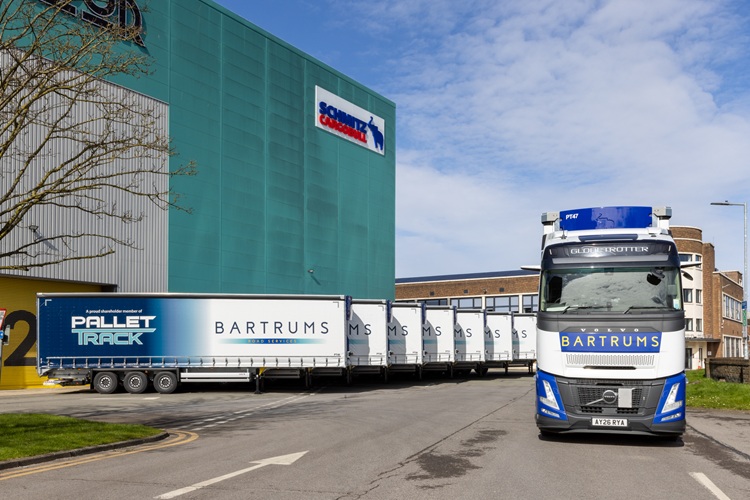
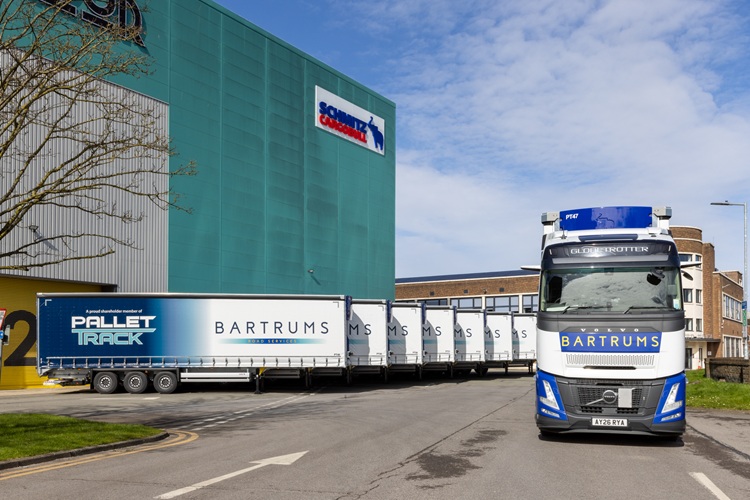
Suffolk-based Bartrums has added 15 new trailers to its fleet, all dual-branded with both the Bartrums and Pallet-Track logos, to celebrate its membership of the pallet network it joined as a founding member back in 2004. 

The dual-branded trailers are the latest addition to Bartrum’s fleet of more than 200 vehicles and comes as the company makes huge investment in its fleet this year. 

Bartrums operations director Tremayne Johnson said:

“As founding members of Pallet-Track in 2004 we couldn’t be prouder of our new dual-branded trailers. 

“Our membership of Pallet-Track is absolutely integral to our overall portfolio of services and our significant investment into these trailers makes us really happy. All our customers will also see them so it’s a great way to raise awareness of our network and visibly demonstrate this alliance. 

“This is just the start of a big year for us in terms of procurement and expanding our fleet, and we’re glad to start this with our dual-branded Pallet-Track and Bartrums trailers.”

Bartrums has earmarked some £4million this year for upgrading its fleet and creating a state-of-the-art electric vehicle charging facility. It includes the 15 high-spec trailers, with 12 of them created by respected German manufacturer Schmitz Cargobull.

Stuart Godman, CEO of Pallet-Track, said:

“It’s an exciting year of growth for Bartrums, and we’re delighted the first new vehicles to the fleet are the dual-branded trailers.

“As one of the founding shareholder members of Pallet-Track, Bartrums have played a huge part in our success. They are a first-class business, and it is great that even more customers will learn about our long-standing partnership through these trailers. 

“To see this level of investment is exciting and is testament to the brilliant service they offer. We look forward to seeing the new vehicles on the road very soon!”

Schmitz Cargobull East Midlands sales manager Aaron Howarth said:

“The order reflects Bartrums’ ongoing investment in modern, high specification equipment. With the combination of flexibility, strength, safety and connected technology, the new trailers are set to deliver long-term value across Bartrums’ operation.”

Pallet-Track owner, northstarr, is exhibiting at Multimodal on stand 8035

Read More...

Port of Tyne competes autonomous container transport trial

Port of Tyne competes autonomous container transport trial

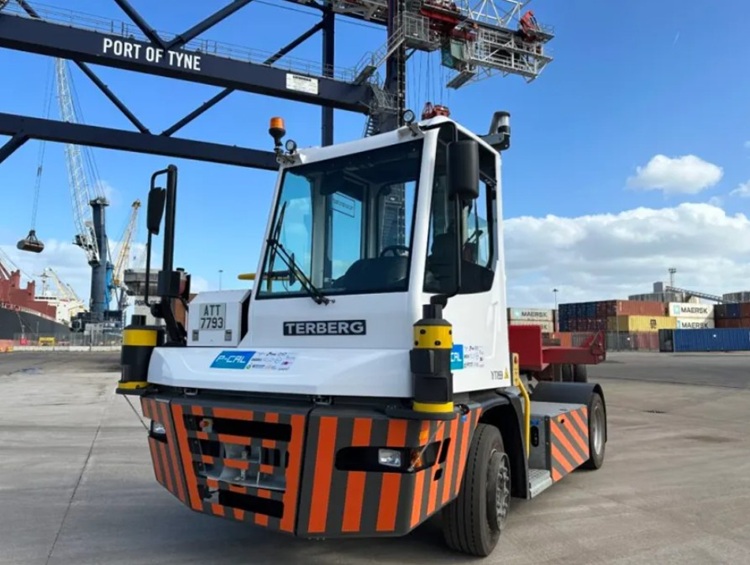
The North East Automotive Alliance (NEAA), alongside the Port of Tyne, Oxa, and a consortium of leading industry and academic partners, has successfully delivered the P‑CAL (Port‑Connected and Automated Logistics) project, marking a major milestone in the region’s journey to become a global leader in Connected and Automated Mobility (CAM).

Delivered through the UK Government CAM Pathfinder programme, P‑CAL was designed to push the boundaries of autonomous logistics by deploying and validating a fully autonomous terminal tractor within a live port environment. Building on the North East’s earlier 5G CAL and V‑CAL initiatives, the project moved autonomous technology from proof‑of‑concept trials into a complex, safety‑critical, real‑world operational setting.

Paul Butler, CEO of the NEAA, said:

“P‑CAL represents a defining moment in the North East’s journey from pilot projects to real‑world autonomous operations. This project has demonstrated not only technical capability, but the strength of collaboration across industry, academia and government.

“The learning gained here will shape future CAM deployment and reinforces the region’s position as a national leader in connected and automated mobility.”

Over the course of the project, the consortium successfully designed, integrated and tested an autonomous container transport solution capable of operating on a busy quayside. The scope of work included the deployment of a fully autonomous terminal tractor supported by a secure, resilient mesh communication network, the capability to integrate with terminal operating systems, real‑time coordination with live crane movements, and the implementation of a robust cybersecurity framework to enable safe, remote and automated operations.

Critically, the system was developed and tested within a newly defined and highly complex Operational Design Domain (ODD), reflecting the realities of a working port environment where traffic density, variable conditions and human interaction present unique challenges.

Graeme Hardie, Operations Director at the Port of Tyne, said:

“Delivering autonomous logistics in a live port environment has been a major step forward for the sector. P‑CAL has shown what’s possible when innovation is applied to real operational challenges, improving safety, efficiency and sustainability.

“The Port of Tyne is proud to have played a leading role in a project that will influence how ports across the UK and beyond approach automation.”

The project was delivered by a strong regional and national partnership led by the NEAA, bringing together the Port of Tyne, Oxa, Nissan, Newcastle University, ANGOKA, LOGISTEED UK Limited (formerly Vantec Europe Limited) and Womble Bond Dickinson. This collaboration combined deep expertise across autonomous systems, logistics, cybersecurity, academia, legal compliance and industrial operations, demonstrating the strength and maturity of the North East’s CAM ecosystem.

Paul Newman, Founder and CEO at Oxa, said:

“The success of P-CAL proves how autonomy will enable the future of resilient logistics operations. Through the project, we’ve demonstrated that existing work vehicles can be turned into a digital workforce – successfully completing autonomous container movements in a dynamic quayside environment, while providing worksite intelligence necessary for real-time industrial optimisation.

“P-CAL provides a blueprint for how ports and industrial hubs worldwide can deploy autonomous technology to drive productivity, efficiency and safety.”

Cyber‑resilience was a fundamental requirement of the project, ensuring that connected systems could operate safely and securely within critical infrastructure.

Shadi AR, CTO at ANGOKA, said:

“Cyber‑resilience has been fundamental to the success of P‑CAL. The project has demonstrated how secure, purpose‑built digital infrastructure can enable safe and trusted autonomous operations in critical industrial environments. This work sets an important example for the future of connected logistics and industrial automation.”

The P‑CAL project demonstrated that autonomous movements can be carried out safely and reliably in a controlled area of the port, and strengthens the case for a much larger deployment. The next phase must examine how the system performs across broader port operations, including the added pressures of multiple vehicles working alongside people, equipment and live commercial activity.

The project has generated valuable technical, operational and regulatory insight that will inform future deployment of CAM solutions across ports, logistics hubs and industrial sites nationwide. It also highlights how autonomy can be put to work for people. By augmenting the capability of the existing workforce, autonomous systems can take on repetitive or more hazardous tasks, allowing skilled workers to focus on higher-value roles. This is particularly vital for the North East, ensuring the region remains at the forefront of industrial evolution while creating a more resilient and tech-enabled labour market.

Mark Cracknell, Programme Director at Zenzic, said:

“P‑CAL is a strong example of how government and industry can work together to accelerate the commercial readiness of CAM technologies. Projects like this are vital in turning innovation into deployment, creating high‑value jobs and ensuring the UK remains globally competitive in connected and automated mobility.”

As the project closes, the outcomes and learning from P‑CAL will continue to shape future CAM initiatives, investment opportunities and policy development, both regionally and nationally. By progressing from controlled trials to live operational deployment, the North East has reinforced its position at the forefront of the UK’s CAM landscape.

With a proven track record in autonomous logistics, advanced manufacturing and electrification, the region is well placed to lead the next phase of CAM adoption, turning innovation into scalable, commercial reality.

CAM Pathfinder is funded by UK Government, delivered by the Department for Business and Trade in partnership with Zenzic and Innovate UK.

Port of Tyne is exhibiting at Multimodal on stand 5040

Read More...
CEVA Logistics renews long-term relationship with Ocado Retail

CEVA Logistics renews long-term relationship with Ocado Retail

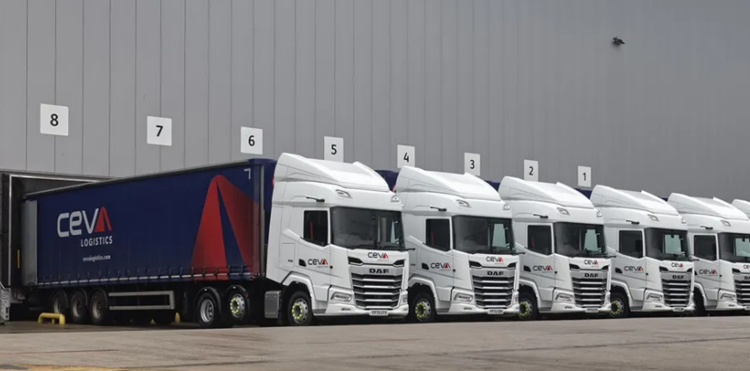
CEVA Logistics has renewed its contract with the world’s largest dedicated online supermarket retailer, Ocado Retail. This reinforces their successful relationship and supports the online retailer’s continued growth in the UK.

The renewed agreement will see CEVA continue to operate as a national consolidation centre for Ocado Retail. CEVA will manage the bulk storage of ambient products and distribute approximately to all seven of Ocado Retail’s Customer Fulfilment Centres (CFCs), which dispatch end-customer orders.

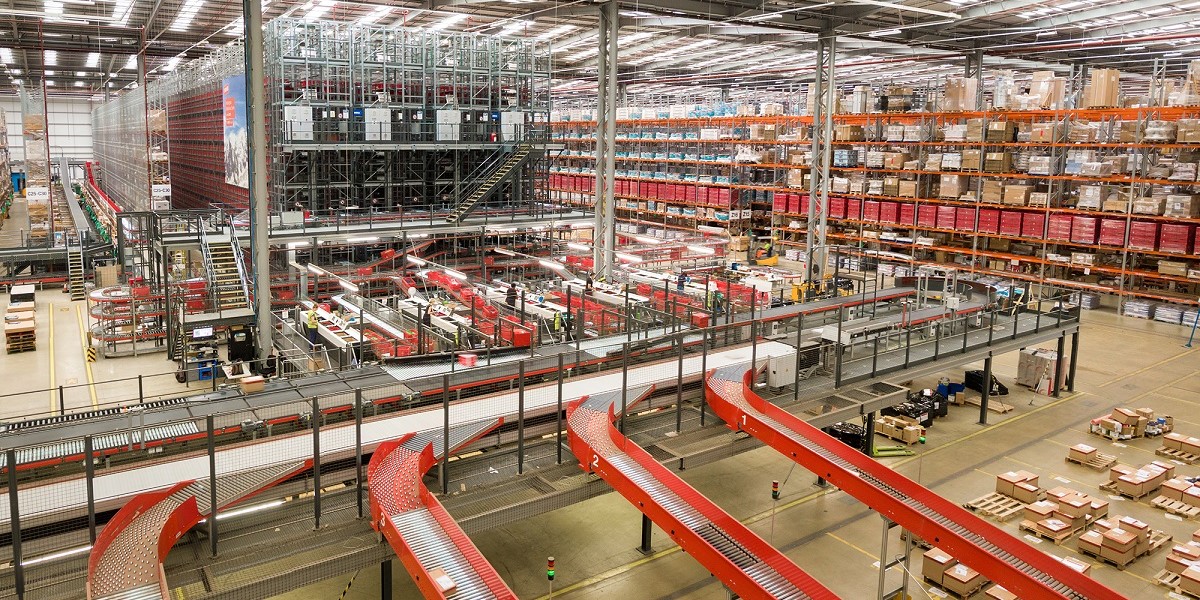
Ocado Retail’s volumes through CEVA have grown significantly year-on-year. To accommodate this increase, CEVA has reconfigured its warehouse design at its Kettering facility to process changes in pallet configuration and changes in SKU profile, significantly increasing storage capacity while maintaining impeccable service continuity.

As part of the renewal process, CEVA successfully delivered a major operational optimisation programme, including a redesigned warehouse management system (WMS), new pick-face implementation, enhanced replenishment processes and updated put away logic. These improvements have increased outbound efficiency while maintaining full service levels throughout the transition.

CEVA’s Kettering facility now provides Ocado Retail with greater stock cover, stabilising and increasing product availability for end customers and enabling the business to manage peak trading periods year-round.

CEVA’s role as a consolidation centre allows Ocado Retail to optimise its CFC operations, ensuring consistent product flow, improved network efficiency and the scalability required to support long-term growth.

Tim Walker, Supply Chain Director, Ocado Retail, said:

“We trust CEVA Logistics to support our growth, consistently adapting to our evolving operational requirements. The team’s ability to implement major system and layout changes while maintaining service has supported in improving efficiency and helped ensure product availability.”

Mike Weaver, Managing Director, Contract Logistics, CEVA Logistics, said:

“This contract renewal reflects the tangible value delivered through our responsive logistics solutions. By combining operational excellence, continuous improvement and scalable infrastructure, we enable Ocado Retail to meet rising consumer demand. We look forward to further developing this successful partnership.”

Read More...

GB Railfreight and Maritime Transport agree new multi-year rail freight contract

GB Railfreight and Maritime Transport agree new multi-year rail freight contract

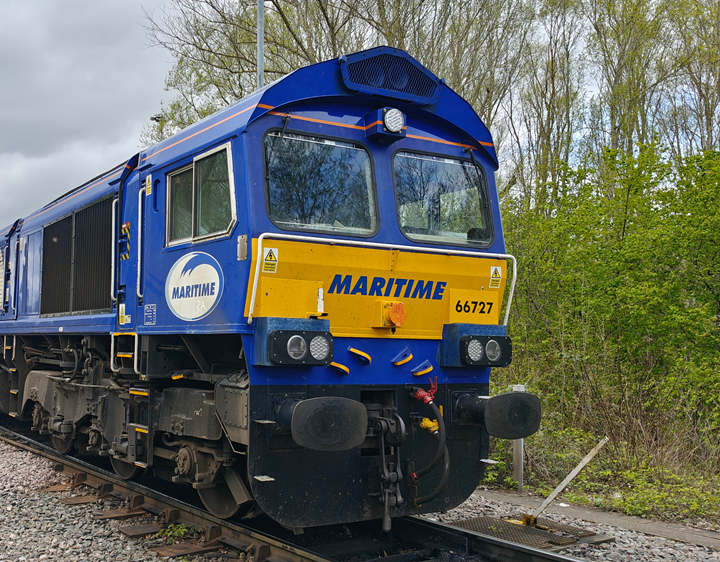
GB Railfreight and Maritime Transport have agreed a new multi-year contract to transport freight across the UK, strengthening a long-standing partnership at the heart of the UK’s supply chains.

Under the agreement, goods will be moved from key deep-sea ports including DP World London Gateway, the Port of Felixstowe and the Port of Tilbury to Maritime’s strategically located inland terminals nationwide.

The deal marks the continuation of a long-term relationship between GB Railfreight and Maritime, which has gone from strength to strength over two decades and has seen a number of new services introduced between major UK ports and Maritime’s inland rail terminals, creating new, low-carbon connections for businesses across the UK.

By moving these flows by rail, the contract will help take thousands of lorry journeys off the UK’s roads each year—cutting carbon emissions, easing congestion, improving air quality, reducing potholes and enhancing road safety, while supporting more sustainable, resilient supply chains.

Julie Garn, Intermodal Director at GB Railfreight, said:

“It’s fantastic news that we will be continuing to deliver for Maritime. This new contract reflects the strength of our long-standing partnership, built on reliable operations and high-quality customer service.

“Together, we are helping ensure goods reach their destinations safely, efficiently and more sustainably.”

John Bailey, Managing Director – Intermodal at Maritime Transport, said:

“This agreement builds on our long-standing relationship with GB Railfreight and underlines the critical role of rail connectivity between major UK ports and our strategically located inland terminals.

“At a time of growing geopolitical instability, increasing pressure on logistics networks, and the urgent need to decarbonise, rail links like these are more important than ever in keeping goods moving efficiently and building a more resilient, sustainable UK supply chain.

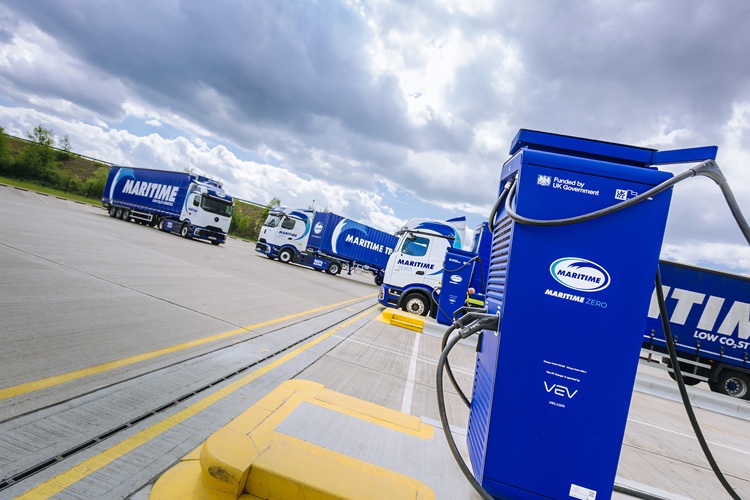
“As we continue to invest in rail-connected infrastructure alongside the rollout of eHGVs and charging infrastructure across a number of Maritime sites, this agreement further strengthens the integrated hub-and-spoke model at the centre of our sustainability strategy, using rail for long distances and zero-emission road vehicles for first and final miles, to deliver a more integrated and low-carbon logistics model for British industry.”

Maritime Transport is exhibiting at Multimodal on stand 5030

Read More...
Maritime Transport introduces first electric HGV into Coca-Cola Europacific Partners’ GB logistics network

Maritime Transport introduces first electric HGV into Coca-Cola Europacific Partners’ GB logistics network

Maritime Transport and Coca-Cola Europacific Partners (CCEP) have reached a significant milestone in decarbonising GB road freight, with the first fully electric heavy goods vehicle (eHGV) now operating across CCEP’s GB logistics network.

The partnership has focused on making electrification work in practice. The two companies worked collaboratively to optimise deliveries and routes, providing the proof of concept that eHGVs can transport soft drink payloads.

The deployment marks a new phase in the long-standing partnership between the two companies and, for the first time, integrates electric road transport into CCEP’s GB domestic supply chain as part of its wider ambition to reduce value chain emissions through its sustainability action plan. 

The Mercedes-Benz eActros 600 entered service in January and now operates on dedicated delivery routes from CCEP’s manufacturing site in Wakefield – Europe’s largest soft drinks plant by volume. Running five days a week, the vehicle completes multi-drop deliveries, supplying soft drinks to convenience and wholesale customers. The nature of the work, with planned routes and consistent payloads, makes it well suited to electrification. The vehicle is currently operating as a proof of concept, with performance being closely monitored as both businesses assess how electric vehicles can be applied more widely across CCEP’s network.

Since entering service, the eHGV has travelled more than 7,000 miles, saving an estimated 12.43 tonnes of CO2e compared to equivalent diesel journeys. Charging takes place at Maritime’s transport depot in Wakefield, where high-powered infrastructure has already been installed to support the company’s growing electric fleet, using electricity sourced from 100% renewable energy across the business.

The initiative forms part of Maritime’s wider investment in decarbonising road freight through Maritime ZERO, its zero-emission road transport division. Delivered in part through the government-backed Zero Emission HGV and Infrastructure Demonstrator (ZEHID) programme, Maritime is introducing 56 eHGVs across its national network during 2026, alongside the development of one of the country’s largest independent charging networks with more than 22MW of installed power once complete. Rollout is already underway, with 12 eHGVs now in operation at Wakefield – the first site to go live – a further 10 based at Maritime’s rail terminal in Tamworth, and two eHGVs at East Midlands Gateway. Additional locations will follow and be energised over the coming weeks and months.

For CCEP, initiatives of this kind are central to its This is Forward action plan, which sits at the heart of its long-term business strategy. The company has committed to reaching net zero greenhouse gas emissions across its entire value chain (Scopes 1, 2 and 3) by 2040, alongside a 30% reduction target by 2030. Transport, including fleet and third-party distribution, accounts for around 10% of its total carbon footprint. As a result, the business is focused on transitioning to electric and ultra-low emission vehicles, optimising transport routes, and working closely with logistics partners to drive down emissions.

CCEP is supportive of UK Government ambitions to decarbonise HGV transport in the UK and is part of the Climate Group business coalition EV100, which looks to support the transition to electric vehicles. As the UK Government seeks to phase out the sale of non-zero emissions HGVs by 2040, action is now required to create reforms allowing eHGVs to carry heavier loads to maximise load capacity, reduce carbon emissions and repeat deliveries.

Maritime has supported CCEP’s GB distribution operations since 2014, with the partnership evolving significantly in recent years as both companies have intensified efforts to reduce supply chain emissions. In 2022, the relationship expanded to include rail, with Maritime launching a domestic distribution service between its terminals in Wakefield and at the Port of Tilbury. Operating six days a week as part of an integrated road and rail solution, the rail service removes millions of road miles annually and cuts carbon emissions by close to 50% compared to a road-only model.

Maritime and CCEP are now exploring opportunities to expand the use of eHGVs, including the potential deployment of additional vehicles in the South as Maritime’s charging infrastructure develops and as the initial deployment is evaluated.

Tom Williams, Deputy Chief Executive Officer, Maritime Transport, said:

“This is an exciting next step in our relationship with CCEP. Having worked closely across both road and rail for several years, introducing an eHGV into live service is a natural progression. Together, we’re very much focused on reducing emissions across the supply chain through a combination of modal shift, low-emission fuels, and the adoption of new vehicle technologies. Having the Mercedes out on the road allows us to assess its performance in real operating conditions, understand where it delivers the greatest value, and explore how it can support our wider decarbonisation ambitions over time.”

Nick Hayward, Logistics Director, Coca-Cola Europacific Partners, added:

“We’re continuing to invest across our operations to build a more sustainable and resilient supply chain, with initiatives like this playing an important role in how we deliver against our commitments. By working with expert partners like Maritime, we can strengthen our capabilities and make meaningful progress towards our long-term sustainability ambitions.”

Maritime Transport is exhibiting at Multimodal on stand 5030

Read More...

LTS Global Solutions bolsters fleet with eight DAF trucks

LTS Global Solutions bolsters fleet with eight DAF trucks

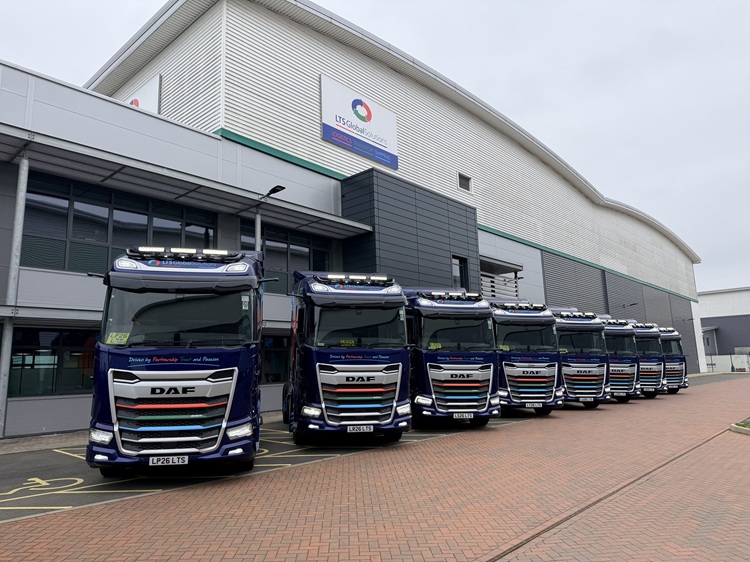
Coleshill-based LTS Global Solutions has recently taken delivery of eight DAF XG 530 FTG 6×2 trucks.

The new trucks have been delivered as a part of an ongoing fleet replacement programme to ensure its fleet remains modern and efficient, giving the company the tools to continue delivering a best-in-class service to its customers.

Finished in a striking midnight blue and fitted with a range of premium driver-focused features, including leather seats, park cool and twin bunks, the new vehicles have been carefully specified to enhance both driver comfort, and operational efficiency.

Built for high-efficiency transport, the DAF XG 530 FTG 6×2 models also feature a powerful 530hp engine, a 6×2 axle configuration and a gross combination weight of up to 44 tonnes, making it well-suited to heavy, long-distance operations.

Combined with modern drivetrain technology and a strong focus on efficiency and safety it is regarded as a premium choice for operators looking to balance performance, driver welfare and operating costs.

The XG cab is designed with extended dimensions to improve aerodynamics and reduce fuel consumption, while also offering significantly more interior space and driver comfort than previous models.

As part of LTS Global Solutions’ strong focus on safety, all eight vehicles are fitted with advanced mirror camera systems, DAF Corner View offering a wider field of vision and internal AI cameras that alert drivers if they become tired or distracted, alongside a suite of technologies designed to comply with the latest European General Safety Regulations.

These also include lane departure warning systems, left-turn audio alerts and radar technology, and reverse cameras looking at the fifth wheel.

Dave Hands, Managing Director at LTS Global Solutions, says the company’s new DAF trucks are part of a broader programme of strategic investment designed to spearhead the company towards its ambitious growth plans.

LTS has set its sights on achieving 165% revenue by 2030 which will be underpinned by continued investment across its fleet, infrastructure and technology, as well as a clear focus on delivering scalable, high-quality logistics solutions for its growing customer base.

He said: “We’re continually investing in every area of the business to make sure we’re delivering the highest possible standards for our customers. It’s about making sure we’ve got the right assets in place to support our customers as they grow, while also improving efficiency and raising standards across the board. Bringing these new DAF trucks into the fleet is another step forward in that journey.

“They not only give us the performance and efficiency we need for long-distance operations but also provide a safer and more comfortable working environment for our drivers, which is hugely important to us as we’re firm believers in giving our staff the best tools available for their respective roles.

“Over the past 18 months, we’ve made significant investments across the business, from fleet and infrastructure through to technology, and that’s all geared towards us as a business achieving on our ambitious growth objectives – and the bedrock which that will sit on is ensuring we invest in every aspect of our operation to ensure we’re best-in-class in everything we do.”

Read More...
CEVA Logistics secures three-year contract with Hilton Food Solutions

CEVA Logistics secures three-year contract with Hilton Food Solutions

CEVA Logistics has announced that it has secured a three-year contract with Hilton Food Solutions to support operations at CEVA’s Chill Hub at London Gateway Port. CEVA Logistics will provide specialist unloading services for fresh and frozen goods alongside import and export customs clearance.

The agreement between the two companies highlights CEVA’s ability to deliver integrated, port-centric logistics solutions for the food industry. Under the contract, CEVA will manage temperature-controlled unloading operations for time-sensitive products while delivering fully integrated customs brokerage services. By combining these capabilities at a single location, CEVA provides Hilton Food Solutions with a streamlined, compliant and efficient solution, reducing operational complexity and accelerating the flow of goods through the port and onwards distribution throughout the UK.

At the London Gateway Chill Hub, CEVA manages the seamless flow of time-critical imports and exports of fresh and frozen goods. Its advanced temperature-controlled capabilities protect product quality and ensure consistent performance, while integrated, in-house customs services streamline processes, reduce risk and deliver end-to-end accountability.

The new operation further strengthens CEVA’s port-centric logistics offering and supports the resilience of UK food supply chains by improving the speed and efficiency of handling high-volume, time-critical shipments.

Peter Hounsome, Managing Director of Hilton Food Solutions, said:

“Selecting CEVA Logistics for our London Gateway operations provides us with a fully integrated solution that brings together specialist temperature-controlled handling and in-house customs clearance. This significantly simplifies our port operations, strengthens compliance, and ensures the fast, reliable movement of our fresh and frozen products.

“As we continue to develop our strategic partnership with CEVA, we are enhancing the resilience and scalability of our importation operations within an increasingly complex global supply chain. As global supply chains face ongoing challenges from shifting consumer behaviour to geopolitical uncertainties, Hilton Food Solutions and CEVA Logistics remain committed to delivering resilient, sustainable, and competitive solutions.

“This strategic partnership not only strengthens our market position but also provides our customers with the confidence and reliability needed to succeed & grow in a dynamic global environment at a time when businesses worldwide are facing ongoing inflationary pressures and market uncertainty. Close collaboration and alignment of our strategic goals with CEVA will be critical to maintaining competitiveness across our end-to-end supply chain.”

Mike Weaver, Managing Director, Contract Logistics, CEVA Logistics, said:

“Our new contract with Hilton Food Solutions demonstrates the strength of our integrated logistics model. By bringing together temperature-controlled handling and in-house customs clearance, we deliver a seamless solution that reduces complexity, enhances compliance and supports the continuous flow of goods through the port. We look forward to building a long-term relationship and further developing our port-centric capabilities in the UK.”

Read More...
FCLHUB launches new digital platform for UK container transport

FCLHUB launches new digital platform for UK container transport

A new digital platform, FCLHUB, is set to go live on 1 July 2026, aiming to bring greater connectivity, visibility and efficiency to the UK container transport sector.

Purpose built for container logistics, FCLHUB has been developed to connect shippers with a nationwide network of vetted hauliers through a single, easy to use platform. The launch comes at a time when the industry continues to face pressure from rising costs, operational inefficiencies and increasing demand for more sustainable transport solutions.

FCLHUB is designed to simplify how container movements are sourced, managed and delivered. By creating a central marketplace, the platform enables shippers to access reliable haulage capacity quickly, while providing hauliers with consistent work opportunities to improve vehicle and driver utilisation.

The platform supports the movement of 20ft, 40ft and 45ft containers and includes access to specialist equipment such as self-loading container vehicles, allowing containers to be safely lifted to ground level without the need for additional infrastructure.

A key focus of FCLHUB is improving operational efficiency across the supply chain. By reducing empty running, increasing backhaul opportunities and streamlining job allocation, the platform aims to lower overall transport costs while supporting more sustainable logistics practices.

FCLHUB will also help bring together lower carbon transport options in one place, including hauliers operating on alternative fuels such as HVO, as well as electric HGV capability as the market continues to develop. This gives shippers greater visibility of more sustainable container transport options while helping hauliers showcase investment in cleaner fleet solutions.

Commenting on the launch, Matthew Deer, Founder of FCLHUB, said:

“Container transport remains one of the most fragmented parts of the supply chain. FCLHUB has been built to bring structure, visibility and consistency to the market.

“Our goal is simple to connect shippers and hauliers in a way that improves utilisation, reduces inefficiencies and creates a stronger, more reliable network for the industry.

“Just as importantly, FCLHUB gives the sector a platform to bring together new transport solutions, from HVO and electric vehicles to specialist container equipment, helping customers make better informed decisions as the industry moves toward lower carbon logistics.”

FCLHUB is now open for early registration ahead of its official launch, with shippers, freight forwarders and hauliers invited to join the platform and form part of the initial network.

www.FCLHUB.com

Read More...
Descartes study: 49% of European shippers and logistics service providers see transport as a strategic differentiator

Descartes study: 49% of European shippers and logistics service providers see transport as a strategic differentiator

Transportation management is rapidly evolving from an operational cost center to a strategic tool that companies use to strengthen their customer service and build competitive advantage. The European Transportation Management Benchmark Study by Descartes Systems Group shows that nearly half of respondents (49%) now consider transportation to be a differentiating factor for their organisation.

The study, conducted in 2025 among 300 senior decision-makers at shippers and logistics service providers in Europe, clearly illustrates this upward trend. In 2024, this was still the case for 38%. The number of organisations that explicitly see transportation as a competitive weapon is also growing: 31% cite transportation as a strategic weapon in the market, compared to 22% a year earlier. 

The results underscore that transport is increasingly becoming a topic of discussion at the executive level. Persistent geopolitical uncertainty, disruptions in international supply chains, and rising customer expectations mean that organisations no longer assess transport solely on the basis of cost, but also on value creation.

This shift is most visible among companies with a strong financial position. In this group, 91% consider transport to be a competitive weapon or a distinguishing factor in customer service, which points to a clear relationship between strategic transport management and operating results.

Despite economic uncertainties, confidence in growth remains remarkably high. 96% of respondents expect growth in the next two years, with the majority (61%) anticipating annual growth of between 5% and 15%.

Shippers are more optimistic than logistics service providers (LSPs): 78% of shippers expect growth of more than 5%, compared to 67% of LSPs.

The increasing strategic value of transport is reflected in technology investment plans. More than three-quarters of respondents (76%) expect to invest more in IT for transport management in the next two years. Among financially leading companies, this share is even higher, with 84% anticipating an increase in investment.

The main reasons for further expanding transport management systems (TMS) have also shifted. Whereas cost savings have historically been the dominant factor, 40% of respondents now cite business growth as the main driver, on par with improved customer service. The survey thus confirms that transport is increasingly being used to support commercial objectives.

“Transportation is becoming less of a purely operational process and increasingly a strategic component of customer value and competitive strength. Companies that structurally modernize their transportation management are building flexibility and growth,” said Elmer Spruijt, VP Transportation Management EMEA at Descartes.

Since 2017, Descartes has conducted an annual benchmark survey of transportation professionals to identify strategies, tactics, and expectations for the industry. Survey participants represent a broad range of individuals responsible for transportation operations at both shippers and logistics service providers in North America and Europe, providing a balanced view of transportation management (TM). The European part of the survey yielded responses from 300 senior decision-makers working in the transport management sector in Germany (75), the United Kingdom (75), France (75), and Belgium/the Netherlands (75).

Descartes is exhibiting at Multimodal on stand 4052

Read More...

Beer52 brews up something new   

Beer52 brews up something new   

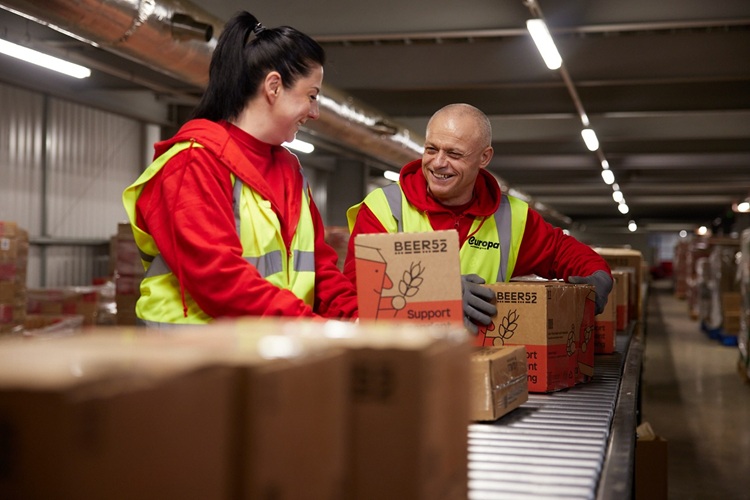
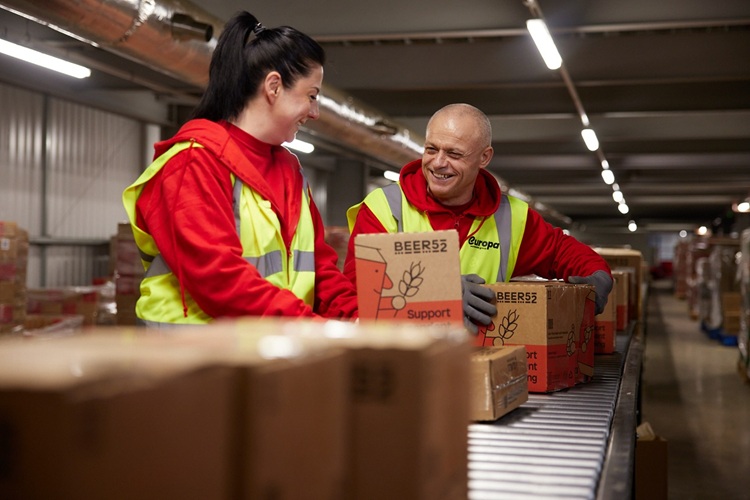
Beer52, one of the world’s largest craft beer subscription clubs, has extended its partnership with Europa Warehouse, signing a contract extension, following eight successful years of collaboration.

This comes as the brand launches Coffee52, a new coffee discovery club for curious drinkers and serious coffee lovers alike, and its first foray into this sector.  

The renewed agreement with Europa Warehouse reflects the strength of a partnership built on flexibility, scalability and Europa’s understanding of fast-growing direct-to-consumer drinks brands.

Founded in 2013 and headquartered in Edinburgh, Beer52 is a craft beer discovery club with more than 100,000 UK members across all of its clubs. Subscribers receive monthly curated boxes featuring 8–10 different craft beers, artisan snacks and Ferment magazine, helping tell the stories of its independent, artisan suppliers.

James Eccleshall, Head of Supply Chain at Beer52, said that the support of Europa enables the brand to support small craft drinks makers.

“We’re proud to be able to champion outstanding small independent drinks makers, introducing our subscribers to rare, small-batch producers and the most exciting hidden gems in the drinks world.”

Europa Warehouse has demonstrated its ability to scale operations rapidly to meet the brand’s fluctuating demands, as well as the scale and depth of its SKUs.  Beer52 ships up to 16 different SKUs each month to subscribers, alongside snacks and its magazine, with total volumes capable of increasing significantly during peak and promotional periods.  Order volumes can rise by as much as 60 per cent within seven days, particularly during the critical October to December period. 

Originally supported at Europa’s Birmingham site, Beer52’s operations expanded and transferred into its state-of-the-art Corby facility as volumes grew. Today, Europa manages fulfilment across Beer52’s expanding portfolio, as well as its successful Wine52, Whisky52 and the new Coffee52 offer, with 1.62M consignments processed at Europa’s Corby facility in 2025.

A key element of the partnership is Beer52’s use of Europa’s bonded warehousing facilities, allowing goods to be stored ahead of seasonal peaks without immediate duty payments. This approach supports improved cash flow and enables Beer52 to plan inventory more effectively during high-demand periods.

Beer52 cites Europa’s collaborative, partnership-led approach as a key factor in the contract renewal, with services and operational processes continually evolving to support the brand’s changing business needs – needs that, as a certified B Corporation, reflect its commitment to social and environmental performance.

Eccleshall added:

“Our successful partnership with Europa has been critical in supporting our growth and managing the extreme peaks that come with a subscription-based model. Their ability to flex quickly, combined with the advantages of bonded warehousing, gives us confidence that our supply chain can continue to scale as our customer base grows.

“We have a true partnership with Europa; our teams have a collaborative approach, continually looking at how we can excel and refine our processes to not just meet but exceed customer expectations.

“Europa has been with us on our journey as Beer52 has grown from a single craft beer subscription into a multi-category drinks business. Their ability to support our seasonal peaks and expansion into wine and whisky has been vital in helping us deliver a great experience to our members.”

Dionne Redpath, Chief Operating Officer and Warehouse Divisional Director at Europa Worldwide Group, said:

“Beer52 is a great example of a modern, fast-growing drinks brand that needs agility, reliability and smart customs solutions from its logistics partner. 

“Beer52 and its other brands aren’t simply a delivery service; they support the growing number of artisan brewers, distillers and winemakers, sharing their stories and bringing them into the homes and the attention of artisan beer, wine and whiskey lovers.

“We’re proud to be supporting Beer52, Wine52 and Whisky52 as they continue to expand and introduce more consumers to premium craft drinks from around the world.”

The renewed contract reflects wider trends across the drinks sector, with UK consumers increasingly seeking premium and craft products, while online and the direct-to-consumer market continue to grow. The number of UK craft breweries has more than doubled in the past five years, highlighting strong entrepreneurial activity and demand for quality and authenticity.  

Read More...

Weetabix and XPO Logistics extend their warehouse management partnership

Weetabix and XPO Logistics extend their warehouse management partnership

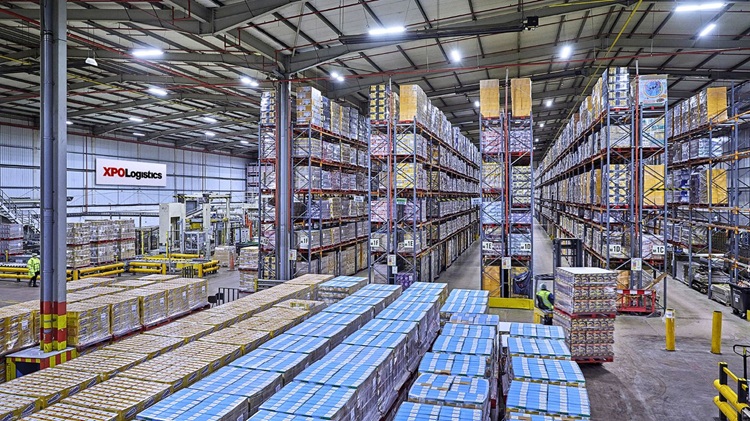
Weetabix is extending its warehouse management partnership with XPO Logistics, a leading provider of innovative and sustainable end-to-end logistics solutions across Europe.
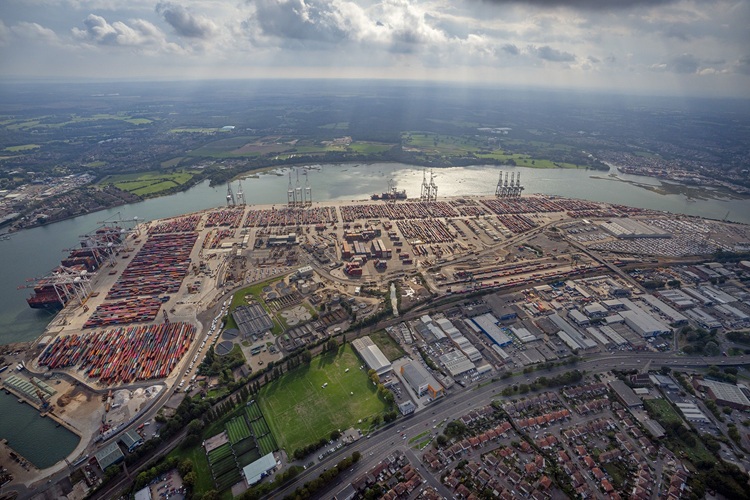
The partnership covers two state-of-the-art UK warehouses in Burton Latimer near Kettering, and Corby, Northamptonshire. The automation across the sites has brought new visibility into their operations and encouraged more proactive decision-making, thereby improving efficiency.

Both warehouses have also maintained an AA+ BRC audit score, the highest level possible to achieve, for the second year.

Richard Spaughton, Head of Supply Chain, Weetabix, said:

“XPO Logistics has more than proved its expertise in all areas of our warehousing, and we are thrilled to be extending our partnership. Its sustainable approach and proprietary technology have already streamlined our warehousing operations, and we are looking forward to continuing to augment our processes even further.”

XPO Logistics also manages the worldwide transportation of Weetabix goods through its global forwarding team at Heathrow, which covers all cross-border services, customs clearance, and aligned transport projects.

Dan Myers, Senior Vice President, Supply Chain – Europe, XPO Logistics, said:

“This has been a true partnership from day one, and together, we’ve delivered on all our shared goals. We improved service by over 9%, enhanced safety by achieving over 1,000 days without a lost time incident, and improved quality by achieving AA+ BRC accreditation on the first attempt. We also released more than £0.5m to reinvest back into the operation—supporting innovation, resilience, and future performance. This is just the start of what we can achieve together.”

Read More...