
Alconedo transport

Bentley Motors commits to use 100% SAF

Bentley Motors commits to use 100% SAF

Bentley Motors has announced that it will use Sustainable Aviation Fuel (SAF) for all customer car airfreight movements worldwide. The commitment applies immediately and represents a significant step forward in Bentley’s global logistics decarbonisation strategy. By switching to SAF in cases where flights are essential, Bentley is significantly reducing emissions associated with air transport while maintaining the high levels of service expected by its customers.

Airfreight will always be a carefully controlled part of Bentley’s global logistics network and is used only when customers request, time-critical or market requirements make it necessary, but when it is required, it must be delivered in the most responsible way possible. As air transport produces significantly higher emissions than sea transport, the move to certified SAF represents a major step in reducing the environmental impact of these essential movements.

Aimee Kelly, Head of Sustainability at Bentley Motors, commented:

“Our transition to using certified Sustainable Aviation Fuel across all customer car airfreight movements reflects how we are taking measurable, evidence based steps to reduce emissions in the parts of our logistics network where flights remain necessary. SAF can deliver significant, independently verified reductions in life cycle CO₂e emissions compared with conventional jet fuel and this makes it a meaningful lever within our wider decarbonisation strategy.

“This initiative forms part of Bentley’s broader programme to reduce operational and value chain emissions in line with our long term Net Zero ambition. By integrating SAF into our logistics operations in this transparent and verifiable way, we’re strengthening the foundations needed to deliver our long term climate goals, while supporting our customers and markets with more responsible distribution practices.”

Sustainable Aviation Fuel is an ISCC-certified alternative to conventional jet fuel, produced from renewable or waste-based sources. It can be used in existing aircraft and airport infrastructure without modification. Depending on raw material and production methods, SAF can reduce lifecycle CO₂e emissions by up to 70–95 per cent compared with conventional jet fuel.

Since introducing SAF into its airfreight operations, Bentley has already transported customer cars using SAF, achieving substantial well-to-wheel CO₂e reductions compared with standard aviation fuel.   

At present, the SAF usage covers all customer car movements. Early exploration is underway to extend SAF across additional logistics routes where airfreight may be required.

This is a major step forward in decarbonising Bentley’s end to end supply chain and ensuring its logistics operations fully support the ambitions of Beyond100+.

The Beyond100+ strategy places sustainability at the core of the brand, redefining every aspect of the business to lead in sustainable luxury mobility. It secures Bentley’s long‑term commitment to low‑carbon, responsible luxury, combining care for the environment with supporting people and innovation.

Read More...

SNCF to sell stake in Rail Logistics Europe?

SNCF to sell stake in Rail Logistics Europe?

SNCF may be considering selling a stake in its Rail Logistics Europe unit.

SNCF has engaged Lazard Inc. to advise on the potential transaction, which could value the rail freight logistics and transport business at up to €800 million ($941 million).

It would appear that Geodis is not part of the process.

Potential bidders could include CMA CGM, AP Moller-Maersk and DSV.

CMA CGM has recently acquired Freightliner in the UK.

Discussions are ongoing and SNCF has not reached a final decision on the size of the stake it would sell.

The SNCF Rail Logistics Europe business includes:

  • Hexafret: the rail wagon groupage organiser
  • Captrain: rail companies connecting Europe
  • Forwardis: the architect simplifying access to rail freight
  • Naviland Cargo: the multimodal door-to-door container carrier 
  • VIIA: the specialist in high-speed rail motorways
  • Technis: a maintenance company optimising locomotive assets
Read More...

LTS expands UK warehouse capacity

LTS expands UK warehouse capacity

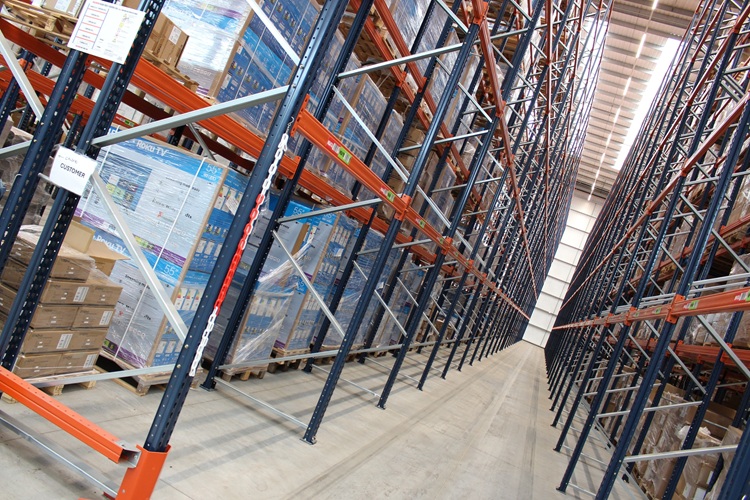
LTS Global Solutions has expanded its offering with the creation of 17,000 new pallet spaces at its 130,000 sq ft facility at Hams Hall, Coleshill, in response to increasing market demand for high-quality warehouse capacity across the UK.

The expansion follows an investment of more than £500,000 in new racking infrastructure including MHE.  The additional capacity enables LTS to onboard new customers at pace, support inventory buffering strategies, and provide compliant storage for regulated goods at a time when availability across the UK’s logistics “Golden Triangle” remains constrained. It reinforces LTS Global Solutions’ ability to adapt quickly to changing customer requirements while continuing to deliver scalable, resilient supply chain solutions.

The Coleshill site, located within the prestigious ProLogis park, is a state-of-the-art logistics facility benefiting from excellent motorway connectivity at the heart of the UK’s “Golden Triangle”. The warehouse operates an advanced Warehouse Management System (WMS) and holds BRCGS accreditation, ensuring the highest standards of quality, safety and compliance for customers operating in regulated and fast-moving sectors. 

LTS is also certified to ISO 9001 and has achieved Planet Mark Business Certification, validating its role as a logistics provider delivering both service excellence and measurable environmental impact.   The company has been officially approved as a registered fulfilment house under HMRC’s Fulfilment House Due Diligence Scheme ensuring that goods stored on behalf of non-UK sellers are managed securely, transparently, and in line with UK tax law.

LTS Global Solutions is a multi-service logistics provider offering logistics, transportation and shipping services across a wide range of industry sectors including retail, food and drink, construction, and automotive.   Within its warehousing and storage function the company provides pallet storage, food warehousing and ambient storage solutions.

The expansion comes at a time when the UK warehousing sector continues to face significant pressure. Ongoing supply chain reconfiguration, nearshoring and e-commerce growth have all contributed to sustained demand for modern, centrally located warehouse space, where there is high care for the products and exacting operational standards.   In this current climate of limited availability and rising costs, flexible operators with the ability to adapt quickly to market requirements are increasingly valued.

Dave Hands, Managing Director of LTS Global Solutions commented:

“Demand for high-quality warehouse space remains exceptionally strong, particularly from customers who need speed, compliance and flexibility. This investment allows us to respond quickly, whether supporting existing customers as they scale, or onboarding new clients who need capacity without delay. Creating 17,000 additional pallet spaces at our Coleshill site is a clear demonstration of our ability to flex and scale in line with market conditions.

“Our focus has always been on combining the right infrastructure, technology and people to deliver practical, customer-led solutions. This investment underlines our long-term commitment to growth and our belief in taking a proactive, visionary approach rather than standing still.”

LTS Global Solutions is an established logistics and supply chain partner, providing warehousing, fulfilment and value-added services to customers across multiple sectors. It is a business which consistently hits above its weight and has built a reputation for its operational agility and customer-centric approach, the business continues to invest in technology, facilities and expertise to ensure it can meet evolving market challenges.

The increase in warehouse capacity forms part of LTS Global Solutions’ wider strategy for growth whilst supporting customers with robust, high quality logistics solutions.

Read More...

IAG Cargo to manage Qatar Airways Cargo ground handling at Dublin

IAG Cargo to manage Qatar Airways Cargo ground handling at Dublin

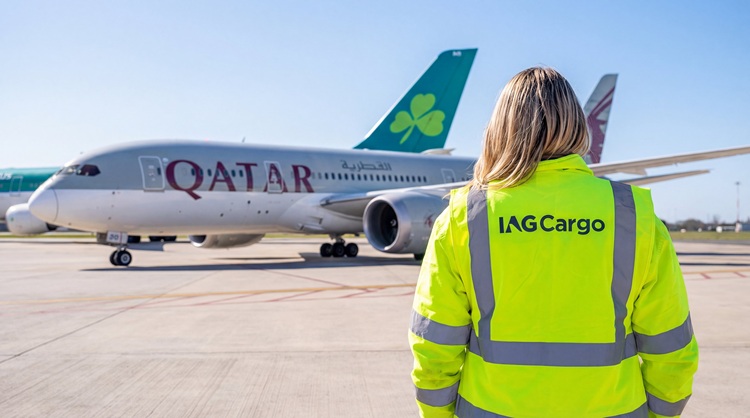
IAG Cargo has been appointed as Ground Handling Agent at Dublin International Airport (DUB) to provide cargo handling services for Qatar Airways Cargo.

Through the partnership, IAG Cargo will manage all Qatar Airways Cargo ground handling activities at Dublin, further strengthening collaboration between the two carriers and enhancing operational alignment at the station.

This forms part of the broader Global Cargo Joint Business between IAG Cargo, MASkargo and Qatar Airways announced in 2025, and supports closer operational integration at key gateways. By aligning ground handling under a single operating platform in Dublin, the agreement enhances service quality, network connectivity and consistency for customers, delivering tangible customer benefits through closer collaboration.

The appointment also builds on IAG Cargo’s recent expansion of third-party handling capabilities, including the introduction of MASkargo operations at London Heathrow. Qatar Airways Cargo, part of the Qatar Airways Group, operates 17 weekly belly-hold flights between Dublin and Doha, with all cargo services to be processed through IAG Cargo’s Dublin facility. 

David Shepherd, Chief Executive Officer at IAG Cargo, said:

“We look forward to working with Qatar Airways Cargo in Dublin. This partnership reflects the trust global carriers place in our operational expertise and demonstrates the strength of our third-party handling capabilities. Dublin has a key strategic position within our network, and our facility offers strong operational connectivity to support Qatar Airways Cargo’s services.”

Mark Drusch, Chief Officer Cargo at Qatar Airways Cargo, added:

“As the world’s leading air cargo carrier, we continuously seek strong, likeminded partners who share our commitment to operational excellence, reliability and customer service. This partnership with IAG Cargo at Dublin, and the launch of the alliance with IAG Cargo and MASkargo supports our growing network and ensures seamless, highquality handling for our customers in Ireland and beyond. We look forward to building on this collaboration as we continue to strengthen our global cargo proposition.”

Read More...

Hapag-Lloyd and DSV expand decarbonization partnership

Hapag-Lloyd and DSV expand decarbonization partnership

Hapag-Lloyd and DSV have signed a two-year Ship Green framework agreement for the purchase of Scope 3 greenhouse gas (GHG) emission reductions. The reductions will be generated through the use of sustainable marine fuels within Hapag-Lloyd’s fleet.

The expansion of the partnership comes on the back of an already successful cooperation between DSV and Hapag-Lloyd on sustainable marine biofuels, which was implemented back in 2022.

Under the new agreement, DSV has contracted a total of 18,000 tonnes of CO₂e emission reductions on a well-to-wake (WTW) basis. The contracted period starts in 2026, during which the emission reductions will be generated using second-generation biofuels produced from waste- and residue-based feedstocks supporting tangible and verifiable progress toward net-zero ocean transport.

In addition to second-generation biofuels, the agreement allows for the inclusion of other sustainable fuel sources, making it the first of its kind. Through this agreement, Hapag-Lloyd and DSV are sending a strong signal to the market and reinforcing their shared commitment to accelerating scalable, future-ready decarbonization solutions for ocean freight.

“We are very pleased to further strengthen our collaboration with DSV through this agreement,” said Danny Smolders, Managing Director Global Sales at Hapag-Lloyd.

“Both companies share a clear ambition to accelerate the decarbonization of global supply chains. By working closely together, we can turn this ambition into action. This agreement demonstrates how carriers and forwarders can jointly drive meaningful progress and scale lower-emission shipping solutions.”

“This agreement is an important step in our joint efforts to decarbonize global shipping at a crucial time for the green transition. Sustainable marine fuels are a tangible and scalable solution to reducing CO2 emissions, and through close collaboration with Hapag-Lloyd, we are enabling our customers to decarbonise their supply chains,” said Michael Hollstein, Head of Ocean Product at DSV.

The agreement is based on a book-and-claim chain-of-custody mechanism that allows customers to claim verified emission reductions, regardless of the physical fuel allocation to specific vessels or routes. Only emissions avoidance from biofuel that has already been used in Hapag-Lloyd’s owned and operated fleet is allocated to DSV. This model enables scalable climate action while sustainable marine fuels remain limited in availability.

Both companies are committed to ambitious climate goals. Hapag-Lloyd aims to achieve net-zero fleet operations by 2045, while DSV has committed to reaching net-zero emissions across its own operations and value chain by 2050. Offering sustainable logistic solutions to customers is a key lever to achieve these goals.

Hapag-Lloyd has used second-generation biofuels for several years and expanded its sustainable fuels portfolio to include biomethane in 2024. Through Ship Green, Hapag-Lloyd offers customers the possibility to claim verified emission reductions by using sustainable marine fuels instead of conventional fossil marine fuel oil (MFO).

Biofuels currently represent the most available and scalable option in sea freight. As a global leader in transport and logistics, DSV actively works with customers to increase their uptake of biofuels, thus accelerating the transition.

By working together and leveraging sustainable marine fuels and the book and claim approach, DSV and Hapag-Lloyd are contributing to the shipping industry’s transition toward a more sustainable future.

Read More...

Landmark deal paves way for return of regular cross-Channel rail freight

Landmark deal paves way for return of regular cross-Channel rail freight

British businesses could soon gain direct rail freight links to the continent, as a landmark deal paves the way for the return of regular cross-Channel rail freight.   

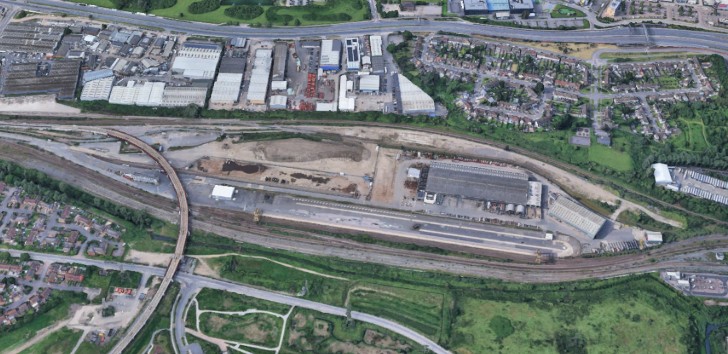
The government-backed deal will see Network Rail and its property development company Platform4 take long-term control over the Barking Eurohub site in east London, currently owned by Legal & General (L&G), with plans for around £15 million of investment to transform it into an international logistics hub.

This investment will help support the return of regular intermodal freight trains, which carry cargo in containers that can be easily transferred across rail, road and sea, through the Channel Tunnel.

This could see British businesses directly import and export goods via rail to France, Germany, Italy and Spain, deepening trade links with Europe and could open the possibility for Scottish whisky, British white goods and consumer goods to be exported on trains to European customers, or London’s bustling food markets to get fresh fruit and vegetables direct from growers on the continent.

It would also help to reduce congestion on the roads, leading to less pollution, less traffic and fewer potholes, particularly in the south-east at the Dartford Crossing and M20/M2 corridors. Growing rail freight is a key part of the government’s ambitions to reform the rail network. Once Great British Railways is established, it will have a statutory duty to promote rail freight use and the Transport Secretary will set growth targets.

Rail Minister, Lord Hendy, said:

“This deal is a huge opportunity to reinvigorate rail freight by paving the way for the return of regular services through the Channel Tunnel.

“It will boost British businesses by opening new trade links to Europe by delivering a faster and more sustainable way to transport goods to the continent and back.

“This is all part of our plan to use our railways to support economic growth and jobs.”

Minister for Industry, Chris McDonald, said:

“This significant investment will strengthen UK supply chains and support jobs across the country by deepening trade links with our closest partner and biggest market in the EU.

“This project will help deliver more sustainable trade and build more reliable connections for the almost 100,000 UK businesses that export to the EU, while creating new opportunities for others here at home.”

Jeremy Westlake, Network Rail’s Chief Executive, said:

“Freight is fundamental to the future of our railway and this landmark agreement highlights the central role it will play as we transition to Great British Railways.

“By securing Barking Eurohub and unlocking more than £15 million of private investment, we’re putting in place the infrastructure needed to restore regular cross-Channel intermodal freight services – supporting British businesses and trade, while also helping to protect our environment.”

Currently, only a very small proportion of rail freight passes through the Channel Tunnel, and this is limited to bulk, single customer orders. This means most freight between Britain and Europe travels via sea, with goods then moving onwards through Britain via roads.  

Not only would Network Rail’s plans for Barking Eurohub reinvigorate the rail freight industry, stimulate the economy and deliver jobs, it will also establish a major international logistics hub offering a sustainable alternative to move goods in and out of the UK by shifting freight from trucks to trains.

Michael Barrie, Head of Real Estate (UK and Europe), L&G, said:

“Legal & General is pleased to let this strategically important site to Network Rail, helping bring the Barking Eurohub site into full use.

“This deal supports vital investment in UK rail infrastructure, unlocking cleaner, faster freight links with Europe and reinforcing the government’s wider growth agenda.”

Maggie Simpson OBE, Director General of the Rail Freight Group (RFG) said:

“Rail freight has a huge role to play in supporting UK trade and the Channel Tunnel is a vital strategic asset that is presently under utilised.

“This investment by Network Rail and Platform4 is of huge importance and will help unlock renewed growth in international rail freight between the UK and Europe. 

“We look forward to seeing new services start operating into the Barking Eurohub as this exciting development takes shape.”

Councillor Dominic Twomey, Leader of the London Borough of Barking and Dagenham, said:

“This deal between Legal & General and Network Rail is a big vote of confidence in Barking and Dagenham’s industrial strength. A revitalised freight and logistics hub at Box Lane will supercharge our local economy, support hundreds of businesses and create new opportunities for growth across the borough as well as London. It builds on the firm foundations of our incredible industrial infrastructure, strengthens our links to international markets and adds the momentum to the wider Thames Freeport.

“Rail freight is forecast to grow at least 3% per year until 2033, even as freight train movements have almost halved during the last 20 years. There is huge, untapped potential and we want to be at the heart of that growth.

“We welcome investment at this scale and we’ll continue working closely with partners to ensure that this development delivers longterm benefits for jobs, local businesses and our residents.”

The rail freight industry is already growing under the government, with volumes increasing by 5% in 2024 to 2025, compared to the previous year. Plus, in July to September last year, intermodal traffic volumes increased by 4% compared to the same quarter in 2024.

The Barking Eurohub deal comes as the government continues to deliver on its plans to expand our international rail passenger connections with Europe, including signing landmark agreements with Germany and Switzerland and working with industry to pave the way for new competitors such as Virgin to launch services in the coming years.

Read More...
Tilbury3 planning approval unlocks next growth phase at Port of Tilbury

Tilbury3 planning approval unlocks next growth phase at Port of Tilbury

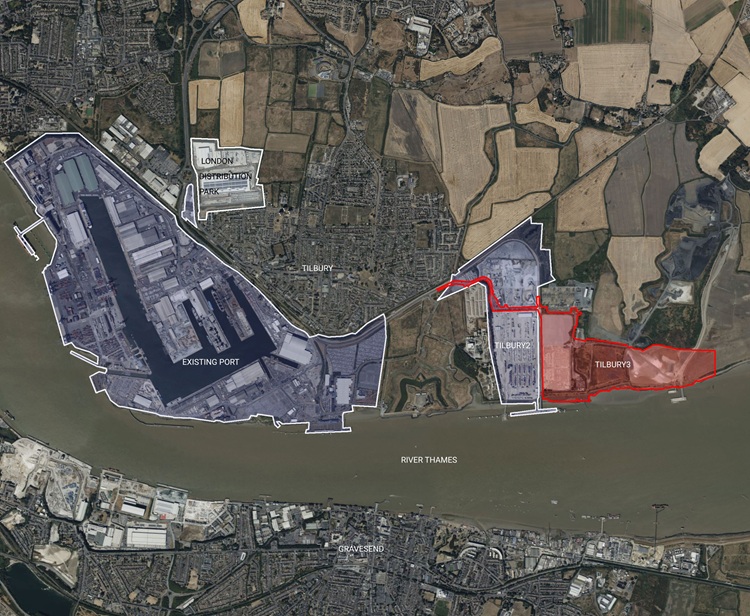
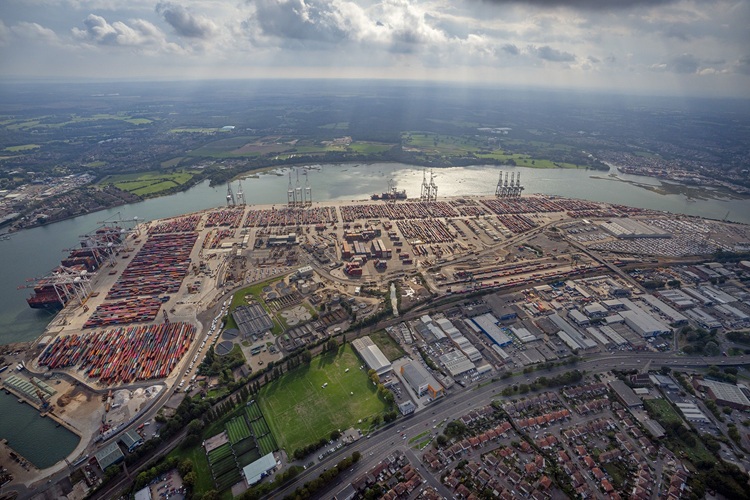
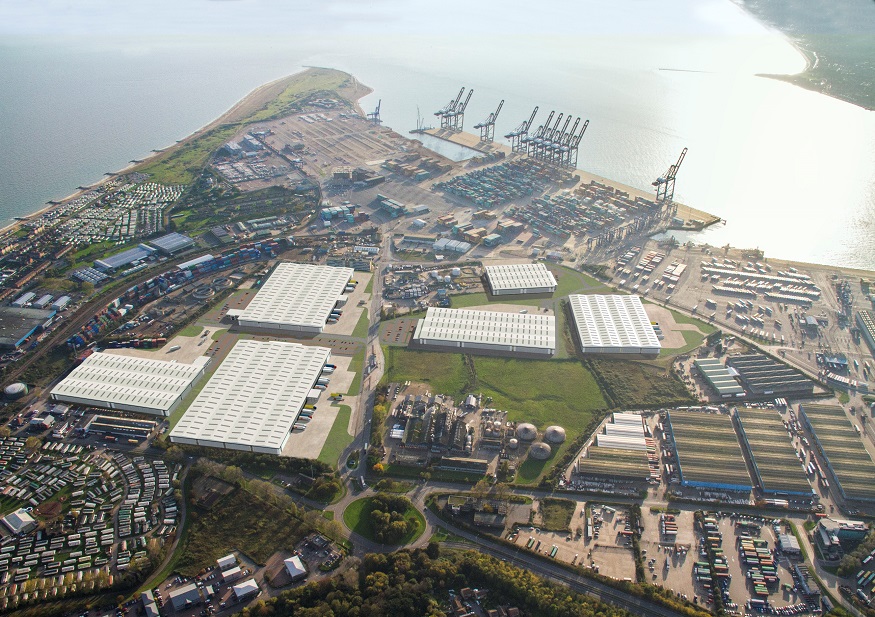
The Port of Tilbury has announced the approval of an expansion plan for the development of Tilbury3 (T3) into a flexible, rail connected port capable of accommodating a wide range of industrial and logistics activities. The site totals 143 acres for port operational use and ecological mitigation.

The outline planning consent from Thurrock Council for Tilbury3 is for general industrial storage, container operations, warehousing, processing and vehicle storage, alongside the handling of construction materials and aggregates, reinforcing Tilbury’s role as a well-connected, high capacity, multi modal hub. The site will benefit from direct strategic rail and road connections, including, in the years ahead, a connection onto the Lower Thames Crossing.

As part of the Thames Freeport, Tilbury3 will benefit from tax site incentives designed to attract new investment and support the long term growth of trade across the region. These advantages complement the wider Port’s existing strengths in bulk materials, Ro Ro, automotive and containerised cargo, while expanding capacity to meet customer growth requirements.

The Tilbury3 development plans will maintain and build on the Port’s commitment to responsible and sustainable growth. Building on the strong environmental stewardship demonstrated through major projects, including Tilbury2 and the London Distribution Park, the Port will continue to enhance local habitats and supporting biodiversity. The T3 plan has clear environmental benefits with a continued focus on respecting the natural environment.

Stuart Wallace, CEO of Forth Ports, said:

“This approval marks an important milestone in our long-term investment strategy for the Port of Tilbury, recognising its strategic location serving London and the Southeast. The Tilbury3 development is located adjacent to the Lower Thames Crossing northern tunnel junction, with Tilbury becoming one of the best road, rail and sea connected ports in the UK.

“Tilbury3 unlocks the next phase of sustainable growth across our operations, enabling us to expand capacity, meet the needs of our customers and create new market opportunities. The development will support existing jobs, create new employment and deliver long term economic value, while our habitat creation plans will ensure we continue to protect and enhance the area’s natural environment.”

David Webster, Regional Director of Port of Tilbury, said:

“We welcome Thurrock Council’s decision to approve Tilbury3, which represents a significant step in supporting our customers’ growth ambitions and strengthening Tilbury’s role as one of the UK’s best-connected ports. The additional capacity, flexible land use and Freeport advantages will allow us to respond to growing market demand and deliver scalable, multi modal solutions for our customers.”

Read More...
Stobart secures multi-year extension for Tesco contract

Stobart secures multi-year extension for Tesco contract

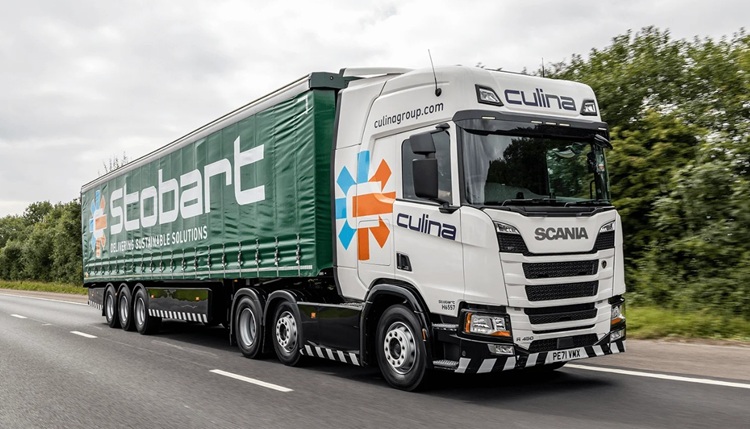
Stobart, part of the Culina Group has announced the renewal of its long-standing partnership with Retailer Tesco, through a new multi-year contract extension.

Tesco has been a customer of Stobart for over fifteen years, during which time both companies have collaborated to deliver industry-first multimodal transportation solutions and develop state-of-the-art distribution centres within the fast-moving consumer goods (FMCG) sector.

This latest contract extension reinforces Stobart’s position as a strategic partner to Tesco and reflects the strength of their relationship, built on a shared commitment to operational excellence and innovation in logistics.

Under the renewed contract, Stobart will continue to provide dedicated secondary transport services for Tesco across its Goole and Doncaster Regional Distribution Centres.

Steve Taylor, CEO of Stobart, said:

“This extension is a testament to the strength of our strategic partnership with Tesco and the dedication of our team. Our relationship has grown from strength to strength over the years, and we remain focused on delivering exceptional service that drives efficiency and value for our customers.”

Read More...
Maritime officially opens Northampton Gateway Rail Freight Terminal

Maritime officially opens Northampton Gateway Railfreight Terminal

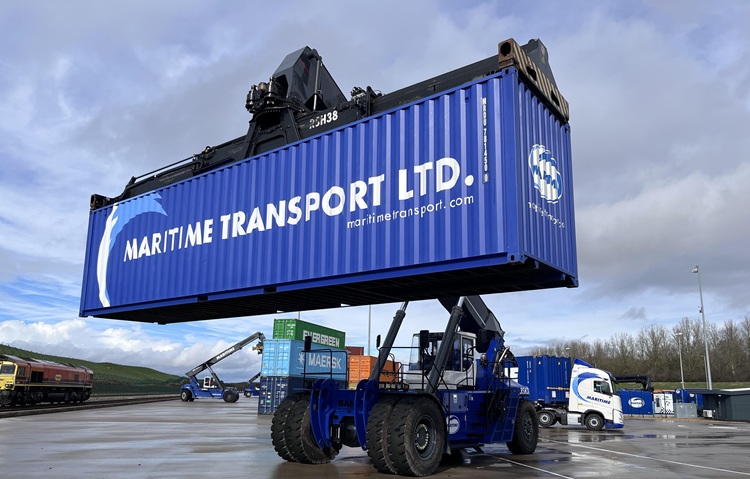
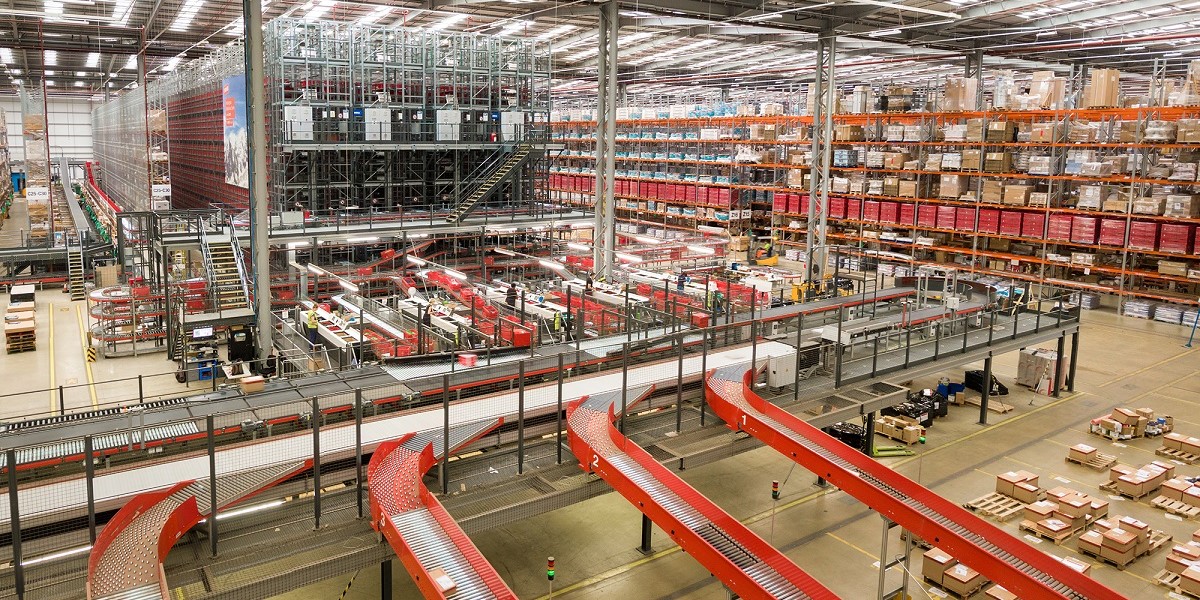
Maritime Transport has officially opened its Northampton Gateway Rail Freight Terminal.

The terminal is part of a larger SRFI being built out by SEGRO – and is adjacent to the M! between junctions 15 and 15A. It is connected to the West Coast Mainline.

Northampton Gateway is already home to huge Amazon and Yusen sheds, with several other sites already earmarked for construction. GXO and ID Logistics have large facilities just the other side of the motorway, and Grange Park and Brackmills are a further five mintes away.

The guest of honour was Lord Peter Hendy, the Minister for Rail – and he unveiled the plaque with John Williams, Executive Chairman of Maritime. 

Northampton Gateway is another Maritime terminal that allows shipping lines, 3PLs and BCOs to use rail for long distance connectivity, working in tandem with Maritime’s burgeoning eHGV fleet for more local distribution.

Lord Hendy emphasised that this multimodal solution was key for the UK’s logistics, sustainability and resilience goals.

Read More...
Fleete opens eHGV charging hub at the Port of Tilbury

Fleete opens eHGV charging hub at the Port of Tilbury

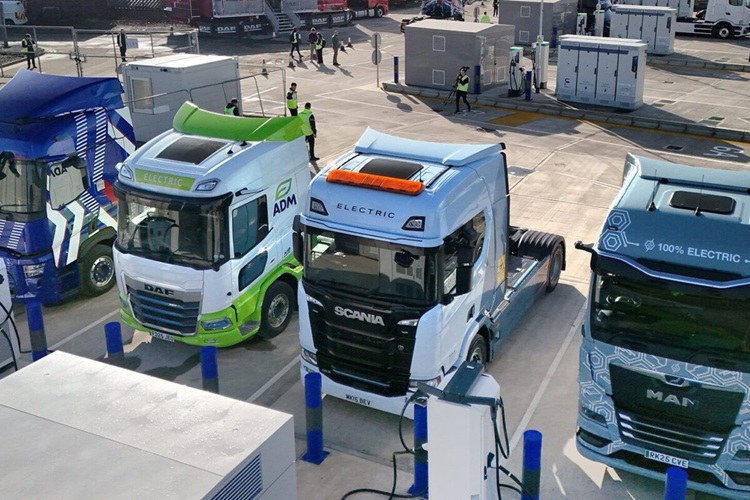
Fleete has opened a dedicated commercial vehicle electric charging hub at the Port of Tilbury.

The 5MW facility features 16 ultra-rapid chargers enabling up to 16 electric HGVs to charge simultaneously.

This site is designed to accelerate fleet electrification across the UK by providing high-powered charging at logistics locations without the need for depot upgrades.

Fleete’s hub, delivered in partnership with the Port of Tilbury and Thames Freeport, is supported by £1m from the UK Government’s Thames Freeport Seed Capital Programme.

Further funding was provided by the Zero Emission HGV and Infrastructure Demonstrator (ZEHID) Programme, funded by the Department for Transport in partnership with Innovate UK.

The investment aims to mark an important step in the Port of Tilbury’s green energy transition, supporting cleaner air for local communities, to enable businesses to capitalise on opportunities in sustainable transport and contributing to economic growth and job creation.

Located at one of the UK’s busiest multimodal freight hubs, Fleete’s facility serves the growing number of zero emission HGVs operating in and through the Port of Tilbury and along the A13 corridor into London.

It also supports national infrastructure programmes, including the Lower Thames Crossing, where contractors are switching to electric vehicles to reduce emissions.

The five megawatt (MW) site includes: six Flex 540kW chargers plus 12 Flex 500A dispensers from Siemens.

There are three charging islands, each of which can be upgraded to MCS with two 540 kW and four dispensers on each bay.

There are also four charging points powered by Power Electronics, featuring two NB Cooled Dispensers and one NB Station system, delivering up to 270 kW per charging point, with upgrade capacity to 360 kW.

The equipment is deployed as part of the eFREIGHT 2030 project.

The hub was delivered with design and construction support from industry partners, including Envevo, bringing high-voltage charging infrastructure into operation within a live port environment.

Chris Morrison, CEO at Fleete, said:

“Today marks a major milestone for Fleete and for the wider logistics sector.

“From announcing the project last year, to now opening the site, our focus has been on proving that shared, high-capacity charging infrastructure can remove one of the biggest barriers to fleet electrification.

“The Port of Tilbury hub shows what’s possible when industry and government work together to deliver infrastructure at scale.

“By supporting customers and collaborating with partners across the supply chain, we’re helping accelerate the transition to zero-emission commercial transport where it’s needed most.”

Aviation, Maritime and Decarbonisation Minister Keir Mather, added: 

”This is a significant milestone in our drive to decarbonise road freight, helped by £1million Government investment at the Port of Tilbury site to install EV chargers for HGVs.

“Road freight is the backbone of our economy, keeping goods moving and businesses growing. By supporting the sector to go electric, we’re cutting emissions and backing the industry to thrive long into the future.”

David Webster, Regional Director and Tilbury and Thames Freeport board member, said:

“The opening of Fleete’s EV charging hub is a significant step forward for the Port of Tilbury as we work to support the decarbonisation of freight and logistics at one of the UK’s busiest ports.

“With thousands of HGV movements through the port every day, access to high-capacity, reliable charging infrastructure is critical.

“This shared facility will play an important role in helping our customers reduce emissions while maintaining efficient operations.”

Stuart Rimmer, CEO (Interim) at Thames Freeport, added:

“This is exactly the kind of project Thames Freeport was established to support.

“By using targeted seed capital funding to unlock private investment, we are helping to deliver infrastructure that strengthens the Port of Tilbury and supports its long-term competitiveness.

“For Thurrock and the wider Thames Freeport region, this means cleaner freight operations, modern infrastructure and continued confidence that the area is well placed to attract further investment in sustainable logistics.”

Ben Fletcher, Chief Executive at Logistics UK, said:

“Public charging infrastructure on this scale, and in such a key strategic location, is precisely what is needed to encourage more operators to use electric vehicles.

“The charging hub is vast, and with 16 ultra rapid chargers it will help operators make the switch to electric fleets – especially smaller operators who can struggle to install chargers at their depots.”

Read More...
Pall-Ex profits rise

Pall-Ex profits rise

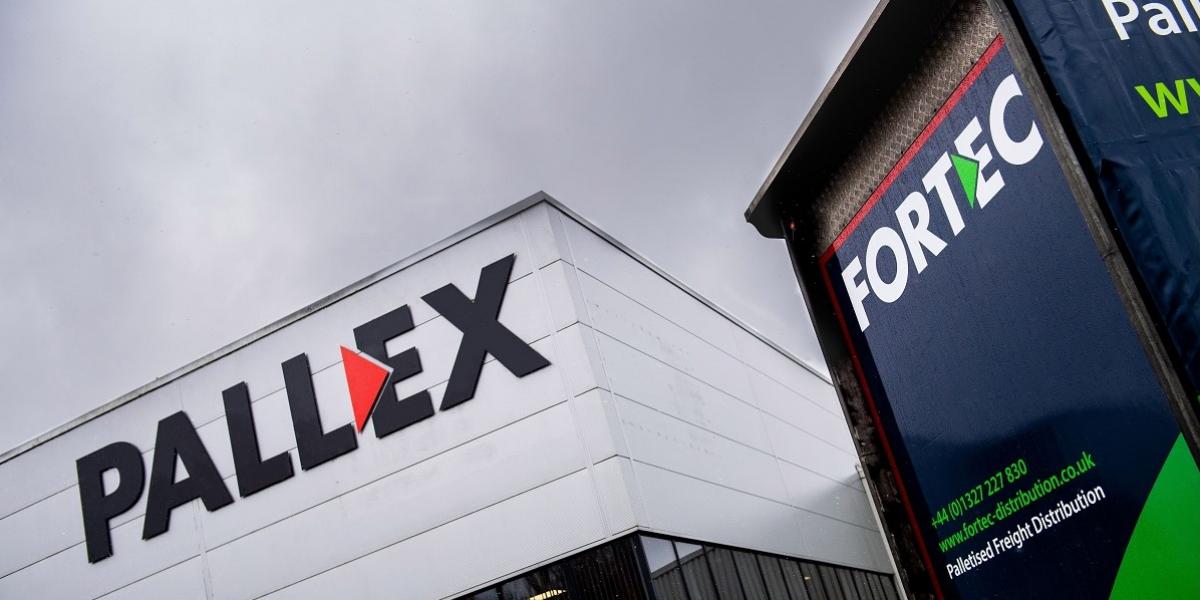
Year of growth at major logistics group despite “challenging economic conditions”Last year Pall-Ex received approval for an £80m national headquarters (image credit: Barberry)

A major logistics group has

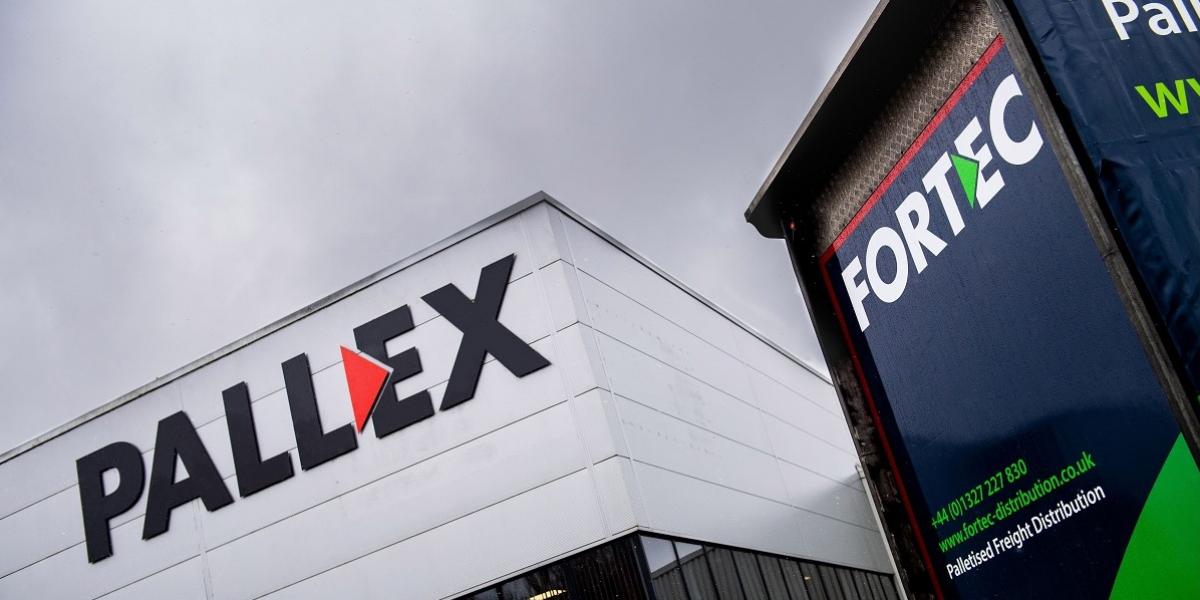
Pall-Ex Group (Fortec and Pall-Ex) has reported another year of revenue and profit growth despite a price sensitive market and challenging economic conditions.

Accounts filed under Pall-Ex Investments show turnover increased from £150.1m to £155.8m in the year to 31 July 2025.

Pre-tax profits went from £937,000 to £1.4m over the same period.

The company said:

“Improvements continue to be made within the operation through efficiencies, making best use of the northern and southern hubs, combined with the ongoing strengthening of the membership network helping to drive service performance.

“The financial year 2025 encountered challenging economic factors surrounding continued inflation, rising employment costs and the intensification of a limited labour pool. To counteract this, Pall-Ex has continued to invest into the business by way of operational efficiencies, frontline staff to support the members, as well as IT infrastructure and development, combined with delivering service excellence and releasing new products into the market, which provides a strong platform for future growth.”

Read More...