Alconedo transport

Logistics UK’S Logistics Awards winners showcase the best of the industry

The logistics industry came together at a glittering gala celebration and dinner at the Park Plaza Westminster Bridge on 11 December 2025, as business group Logistics UK announced the winners of the Logistics Awards 2025.

Now in its ninth year, the annual event recognises the achievements of businesses and individuals who have made a significant contribution to the logistics and supply industry in the past twelve months. This year’s event, supported by Crown Oil, saw stellar entries from the road, rail, sea and air industries, all displaying outstanding commitment, knowledge and expertise of their sectors.

Award winners included the Port of Dover, Woodland Logistics, GXO, Glasgow Prestwick Airport and DP World. The quality of candidates nominated for Rising Star of the Year meant the judges could not separate a winner, and chose to recognise two individuals: Beth Baxter, Fleet Coordinator at Swain Container Solutions and Elliott Lancaster, Innovation Manager at Omnes Global and PhD candidate at Keele University. 

Malcolm Wilson, former CEO at GXO Logistics received the prestigious Lifetime Achievement Award, and Logistics Leader of the Year was awarded to John Trenchard, Vice President Commercial & Supply Chain at DP World. Trenchard was recognised for his Modal Shift Programme, resulting in the removal of 28,000 tonnes of CO2 and almost 9 million truck miles in 2024.

The evening also saw Lee Thompson-Halls, Fleet Transport Manager, Brocklesby Ltd announced as the winner of Logistics UK’s Transport Manager of the Year competition for 2025, sponsored by Samsara.

Logistics UK Chief Executive Ben Fletcher said:

“Every year we are proud to host the Logistics Awards, showcasing the widespread skills, talent and expertise of our industry. The quality of entrants was extremely impressive and acts as a reminder of the exceptional organisations and individuals working in the sector today. 

“Those who were shortlisted for awards should feel proud of themselves and their achievements: competition was stiff, and judges had a tough job on their hands determining the winners.”

The Logistics Awards 2025 winners are:

International Logistics Business of the Year (sponsored by Motive): Currie Solutions Group

Highly commended: Harrison Spinks and Universe

Public Services Operator of the Year: M6toll (Midland Expressway Ltd)

Most Innovative Company of the Year: Gregory Distribution Ltd

Highly commended: Palletline Ltd

Freight by Water Business of the Year: Port of Dover

Highly commended: Ellerman City Liners

Decarbonisation Initiative of the Year (sponsored by Close Brothers): Evri

Highly commended: Grid Smarter Cities in partnership with Southwark Council

Logistics Technology Provider of the Year (sponsored by Depot Connect International): Parcelly

Highly commended: Microlise

Van Business of the Year (sponsored by Logistics UK Recovery Service): Tesco.com 

Highly commended: Efret and Northgate Vehicle Hire

Logistics Partner of the Year (sponsored by Crown Oil): Uniserve and Sainsbury’s

Highly commended: Aramex UK

Air Freight Business of the Year: Glasgow Prestwick Airport

Diversity and Inclusion Initiative of the Year (sponsored by Port of Dover): GXO

Highly commended: National Grid

Rail Freight Business of the Year (sponsored by Howard Tenens Logistics): DP World

Highly commended: Tesco distribution Rail Network

Warehousing Business of the Year: Howard Tenens Logistics

Highly commended: XPO Logistics 

Last Mile Delivery Business of the Year (sponsored by Wise): Life Couriers UK

Most Innovative Product of the Year (sponsored by Palletways): Collett & Sons Ltd’s Blade Adaptor Trailer

Safety in Logistics Initiative of the Year (sponsored by DP World): Pallet-Track Ltd 

Rising Star of the Year: Beth Baxter, Fleet Coordinator, Swain Container Solutions and Elliott Lancaster, Innovation Manager and PhD candidate, Omnes Global/Keele University 

Logistics Leader of the Year (sponsored by Flexis): John Trenchard, Vice President Commercial & Supply Chain, DP World

Highly commended: James Stephens, VP Corporate Affairs UK & Ireland, DHL Supply Chain

Road Transport Operator of the Year (sponsored by Brigade Electronics UK): Woodland Logistics

Logistics UK’s Lifetime Achievement Award: Malcolm Wilson, former CEO, GXO Logistics

Read More...

DCS Group and XPO Logistics drive forward strategic partnership

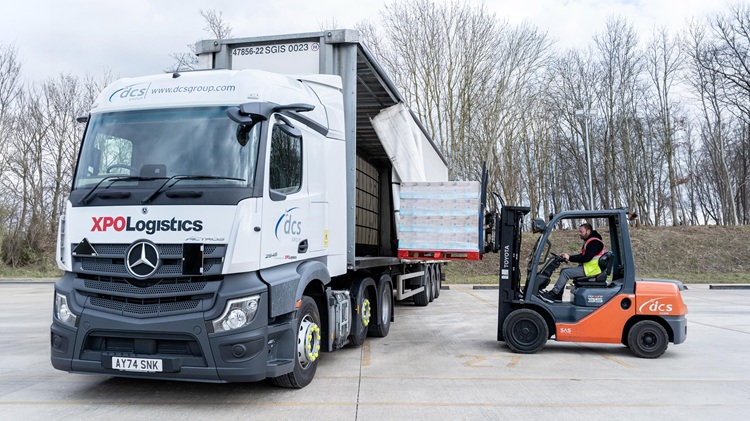
DCS Group, a leading distributor and manufacturer of household, health and beauty, and grocery brands in the UK and XPO Logistics, a leading provider of innovative and sustainable end-to-end supply chain solutions across Europe, are strengthening their long-term partnership to help DCS Group continue to meet the exacting expectations of its customers through focused innovation and operational excellence.

As part of the evolving partnership, XPO Logistics has significantly expanded the dedicated fleet serving DCS Group, including newly liveried trailers. This investment supports hundreds of deliveries made every week from DCS Group’s flagship distribution hub in Banbury, Oxfordshire. 

Powered by XPO Logistics’ proprietary Transport Management System (TMS), which provides enhanced tracking, DCS Group and XPO Logistics are improving visibility and working smarter to build a more sustainable logistics platform for DCS Group and its customers.

“DCS Group is a growth business, expanding into new markets, channels, and services,” said Carl Palmer, Chief Operations Officer of DCS Group. “XPO Logistics has proven to be a true strategic partner, adapting alongside us, investing in innovation and helping us uphold the high service standards our customers expect. Their ability to simplify logistics while enhancing outcomes is key to our continued success.”

“We’re two businesses working as one team. What we are achieving together is textbook partnership, supporting not only day-to-day execution but also the ambitions for growth and transformation,” said Dan Myers, Managing Director – UK & Ireland, XPO Logistics. “Our relationship is rooted in shared values and a laser focus on the customer. Together, we’re building a supply chain that evolves with the needs of our number one stakeholder, the customer.”

This partnership reflects XPO Logistics’ commitment to enabling strategic customers like DCS Group to innovate, grow, and exceed service expectations, while also improving environmental outcomes.

Read More...

New year, new name: Samphire Cargo to rebrand as Samphire Customs

Samphire Cargo has announced that it will be changing its trading name to Samphire Customs, effective 1 January 2026.

The rebrand reflects the company’s core expertise and primary service offering: customs clearance and customs compliance. Since its formation, Samphire has built a strong reputation for guiding businesses through complex customs procedures, particularly following Brexit. The new name more clearly communicates what the business does best, reinforcing its position as a specialist customs clearance provider. Samphire operates from offices in Dover and Lesquin, France, enabling seamless customs support and transport services across both the UK and EU.

The change is a strategic move to align the brand more closely with the services that sit at the heart of the business.

The rebrand comes at an exciting time, as Samphire Customs has also been named a finalist in the BIFA Freight Service Awards – Customs Compliance category. The winner will be announced on 15 January, further recognising the team’s expertise, commitment to compliance, and high standards of service within the freight and logistics industry.

Read More...

Europa steps up to support customers as software outages cause delays

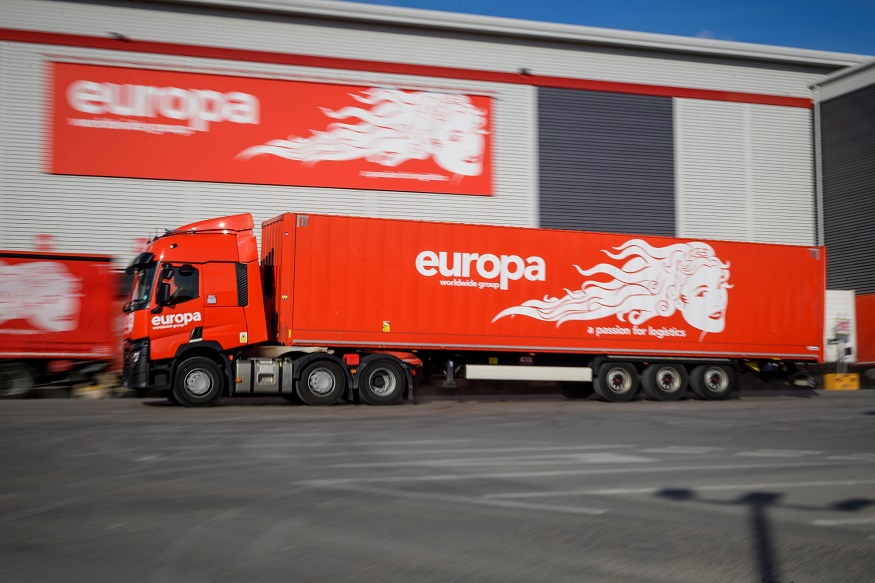
Europa Road has demonstrated its ability to keep goods moving, whatever the challenge, with a huge manpower investment to tackle ongoing external customs software outages.

The business has been working proactively to minimise disruption for customers at one of the most commercially critical times of the year.

Changes to the EU’s Union Customs Code have prompted member states to upgrade their electronic customs systems, enhance supply-chain transparency, and modernise trade processes. 

As part of this, and in a bid to continue to enhance its operations, a new French customs system, Delta I/E has been deployed. But, frequent outages of the new software system have caused huge delays, tripling transit times for many businesses, resulting in the most difficult conditions since Brexit.

Building on its reputation as the largest customs agent in Calais, Europa has taken responsibility for managing outages swiftly, investing 200+ man-hours, with its customs teams working around the clock to get anticipated declarations in place for cargo to clear.

Europa Road is the dedicated European road freight division of leading logistics provider, Europa Worldwide Group. In line with its solutions-focused approach, its team has worked tirelessly to limit disruption. 

With 60 in-house customs specialists operating across the EU and UK, George Wrench, General Manager at Europa Worldwide Group and head of the customs team, explained:

“The existing Delta G software has been replaced by a new, modern Delta I/E, which was rolled out permanently at the start of Q4.

“But the surge in transactions pushed through the platform resulted in repeated outages, effectively halting freight flows for hours at a time.  This meant freight movement had to be halted, resulting in hours of costly downtime. For some customers, transit times to EU countries increased from two to six days – a huge delay with massive implications.”

Europa Road works with businesses in a wide range of sectors, many of which are key contributors to the British economy. The outages have particularly impacted full loads, and costs have mounted because trailers are not able to cross the Channel. Europa’s customs team is engaging daily with customs authorities to ensure the seamless movement of goods across the globe.

George continued:

“The instability has coincided with the peak ‘golden quarter’, the busiest and most commercially important period for many of our customers. Our teams – including senior management and directors – have dedicated a substantial amount of time to planning, scenario-modelling and operational intervention to overcome the challenges of a system that was, at times, unable to function. Ensuring continuity for our customers is a fundamental part of our business model, which is why we’ve invested so heavily in mitigating the impact of recent outages.”

The Delta I/E outages follow a period of uncertainty for British businesses over changes to French fiscal regulation impacting Regime 42. In response to these changes, which effect companies exporting goods under Delivery Duty Paid (DDP) as of January 2026, Europa launched two simple solutions under its family of customs solutions, Europa Flow. 

Initially launched in 2021 in response to Brexit, the family of Europa Flow products overcame the post-Brexit administrative burdens and guarantees a seamless and hassle-free customs clearance process. Europa Road was the first to market with its Money Back Guarantee in 2023, which ensures the company absorbs all costs associated with transit delays.

Read More...

RHA and Women in Transport warn of looming workforce crisis

The RHA (Road Haulage Association) and Women in Transport (WiT) are calling for urgent action to tackle a growing generational challenge in the UK transport and logistics sector. 

They urge the industry to better cater for generational expectations in the workplace as it faces up to long-term recruitment and retention challenges. 

The bodies have joint authored their Navigating Generational Change: Building a FutureReady Transport Workforce report which reveals that the average age of transport workers is now 46, with nearly 40 percent expected to retire within 10-15 years. 

Only two percent of HGV drivers are under 25 at a time when the industry needs to attract 60,000 more a year for the next five years to meet demand and drive growth. 

Meanwhile, access to flexible working in frontline roles remains at just 14%, despite younger generations ranking flexibility and wellbeing among their top priorities. 

The report – which the bodies released at the RHA’s Logistics Leaders Forum in London today (Tuesday 9 December) – sets out 11 actions for employers to build a future-ready, multigenerational workforce:

  1. Map workforce demographics and retirement risk
  2. Audit and update policies for real-world usability
  3. Train line managers in generational leadership
  4. Introduce structured intergenerational mentoring
  5. Elevate early-career and underrepresented voices
  6. Modernise learning and development to suit all generations
  7. Make health and life-stage inclusion standard
  8. Build belonging across age groups
  9. Embed generational inclusion into workforce strategy and KPIs
  10. Share generational data across the sector
  11. Prepare now for Gen Alpha 

Richard Smith, Managing Director of the RHA, said: 

“The road transport industry is the backbone of the UK economy. But like every sector, it faces a changing world. By understanding how different generations view work, skills, and career progression, we can create strategies that attract, retain, and develop talent across every age group.” 

Jo Field, Chair of Women in Transport, added: 

“Age is still one of the most overlooked yet consequential aspects of workplace diversity. If we fail to bridge generational perspectives, we risk losing the talent that makes our sector innovative and resilient. The organisations that succeed will be those that make the most of every generation’s strengths.” 

RHA and WiT warn that without immediate action, the sector risks significant skills gaps, reduced resilience, and long-term disruption to transport operations across the UK. 

They call on transport and logistics businesses to share the report with their leadership and HR teams, and to partner with WiT and the RHA to pilot intergenerational initiatives. 

Read the report here: Navigating Generational Change: Building a FutureReady Transport Workforce.

Read More...

Community Network Services (CNS) advances phased rollout of new PCS

Community Network Services (CNS), a DP World company, has rolled out the latest phase of its new CNS Port Community System (PCS) to customers, marking a key milestone for the new digital platform.

The new PCS solution, built on the cloud based CARGOES platform, is set to replace CNS’ legacy Compass system. The platform features a modern, user friendly interface that improves navigation, boosts productivity, and streamlines time critical workflows.

The PCS rollout is progressing successfully, with the first phase completed through a carefully managed, location by location deployment, with the initial terminals now fully operational. CNS is preparing the next phase, expanding the PCS to additional key terminals, including DP World Southampton and DP World London Gateway.

Future ready by design, the PCS is positioned to support future integration with essential operational and management systems. It streamlines cargo workflows and leverages cloud native architecture to adapt to evolving business, commercial, and compliance requirements.

Matthew Bradley, Managing Director at CNS, said:

“Compass has been an industry-standard solution since 2010, trusted by the ports and logistics community for more than a decade. The transition to the new PCS system takes everything our customers value about Compass and enhances it for the digital era. Our investment in the CARGOES platform will help ensure we’re ready to meet the regulatory and operational challenges of tomorrow and keep trade flowing for our customers.”

James Roth, Chairman and CEO, Seacon Group, said:

“Working with CNS during the pilot phase of the new Port Community System has been seamless. The new CNS PCS platform has already demonstrated significant improvements in speed, reliability, and visibility across our export operations. Its intuitive design and integration flexibility make day-to-day processes more efficient and reduce manual intervention. We’re excited to see how this innovation will continue to enhance collaboration across the wider port community.”

Since its introduction in 2010, CNS’ Compass system has been central to trade logistics at UK and European ports, improving communication, visibility, and efficiency for shipping lines, freight forwarders, terminal operators, and customs brokers. The phased migration from the legacy Compass system to the new CNS PCS will ensure continuity of service for these mission-critical operations.

Read More...

Kuehne+Nagel and SWISS strengthen partnership to accelerate more sustainable aviation

Kuehne+Nagel, one of the world’s leading logistics providers, and Swiss International Air Lines (SWISS), Switzerland’s premium airline, are strengthening their strategic partnership to drive more sustainable aviation. With the signing of a Memorandum of Understanding, both companies will collaborate on sustainability projects, with a particular focus on innovative technologies to improve efficiency and reduce environmental impact.

The partnership centres on a shared commitment to sustainable aviation fuel (SAF) produced by Synhelion, a Swiss cleantech pioneer that converts sunlight into renewable synthetic fuels like solar jet fuel. To support scaling this technology, Kuehne+Nagel, SWISS, and its air freight division Swiss WorldCargo, have agreed on a long-term offtake agreement of SAF that provides Synhelion with planning security and drives innovation in the sector. This commitment provides producers such as Synhelion with the certainty needed to expand their output and advance new technologies.

Starting in 2027, Kuehne+Nagel will purchase Synhelion SAF from SWISS under a five-year agreement for its cargo shipments by Swiss WorldCargo. This reinforces its commitment to decarbonising logistics and offers customers the opportunity to reduce their CO₂ footprint.

“To meet the aviation industry’s climate targets, we must scale the production of synthetic SAF. At Kuehne+Nagel, we are taking the lead by partnering with SWISS and Synhelion to accelerate these technologies, making them economically viable,” explains Yngve Ruud, Member of the Management Board responsible for Air Logistics. “With it, we can offer our customers the opportunity to reduce their environmental footprint with this innovative technology.”

“Sustainable aviation fuels are a key building block for making air travel more sustainable. They remain scarce and costly—which is exactly why we need strong partners,” says SWISS CEO Jens Fehlinger. “We are pleased to be working with Kuehne+Nagel to implement the first commercial offtake of Synhelion’s fuel. This marks an important step forward and sends a clear signal that we intend to actively shape this path.”

Read More...

Freight forwarders urged to incorporate updated Standard Trading Conditions

With just two weeks remaining before the updated Standard Trading Conditions (STC) come into force, the British International Freight Association (BIFA) is urging its members to ensure they are fully prepared to implement them from 1 January 2026.

The revised STC, unveiled in September, replace the previous version last updated in 2021. They have been developed in response to significant changes in the UK’s trading environment, including a marked increase in customs-related activities.

In addition, ongoing turbulence in global trade has heightened the level of risk faced by BIFA’s corporate members in the conduct of their business.

Steve Parker, director general of BIFA, emphasised the importance of effective implementation:

“The importance of BIFA members ensuring that their incorporation of the BIFA STC into their contracts with their customers is effective cannot be stressed enough.

“Failing to implement an effective incorporation process will leave BIFA members unprotected against potential claims.

“Effective incorporation means advising clients and liability insurers of the changes, training staff on the updated clauses, and considering any procedural changes required within their operations.

“There is a huge amount of information about the new STC and how to incorporate them on the BIFA website, and I urge members to visit that section.”

BIFA continues to encourage all members to review the updated Standard Trading Conditions and take the necessary steps to ensure they are fully embedded within their contractual and operational processes ahead of the January deadline.

Read More...

DHL and CMA CGM accelerate decarbonization of ocean freight

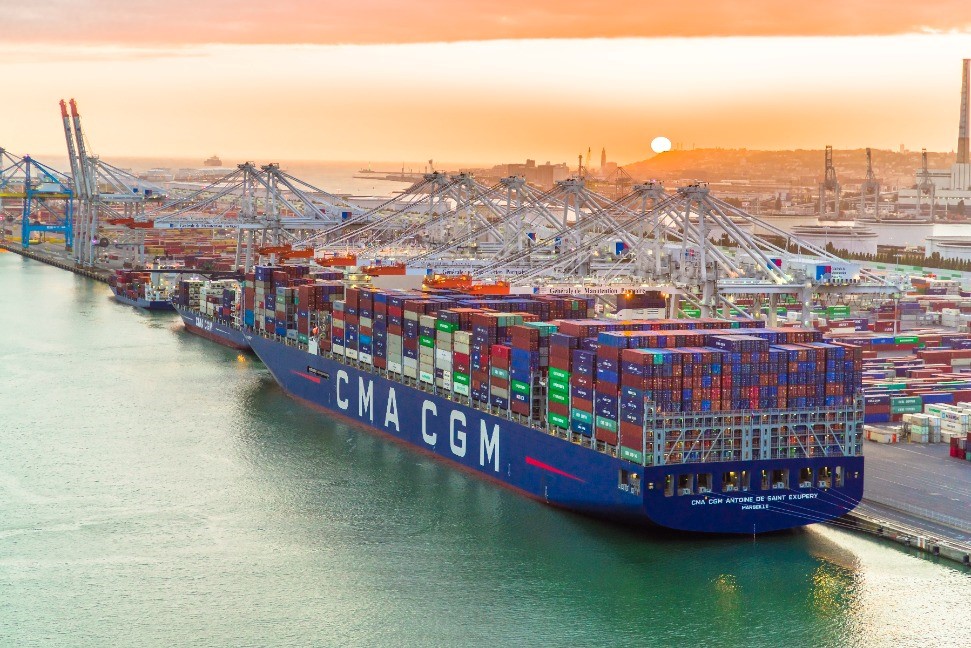
DHL Global Forwarding and CMA CGM have taken a significant step toward decarbonizing global container transport. The two companies have agreed to jointly use 8,990 metric tons of UCOME second-generation biofuel, enabling an estimated 25,000 metric tons of CO2e well-to-wake emission reduction for ocean freight transported under DHL’s GoGreen Plus service. This initiative empowers DHL customers to significantly reduce the carbon intensity of their international supply chains while accelerating the industry’s transition to alternative marine fuels.

“This collaboration marks another milestone in our mission towards low-carbon supply chains,” said Casper Ellerbaek, Head of Global Ocean Freight at DHL Global Forwarding. “By leveraging sustainable marine fuels, we help our customers achieve their climate goals and drive real progress toward decarbonization.”

Through DHL’s GoGreen Plus and CMA CGM’s ACT+ low-carbon transport offering, shippers can integrate sustainable maritime transport into their logistics operations. CMA CGM will physically bunker the biofuel across its fleet, ensuring that emission reductions correspond to DHL’s Book & Claim approach. DHL’s GoGreen Plus service enables customers to cut well-to-wake emissions by selecting sustainable marine fuel options for their transport, allowing reductions of up to 80% GHG emissions compared to conventional maritime fuel.

While DHL aims to reach net-zero GHG emissions by 2050, Olivier Nivoix, Executive Vice President Shipping, CMA CGM Group, confirmed:

“Our partnership with DHL demonstrates how collaboration can accelerate the shift to low-carbon shipping. ACT+ offers reliable and scalable solutions backed by our fleet designed for alternative fuels. CMA CGM, committed to Net Zero Carbon by 2050, has already cut the carbon intensity of its shipping activities by 57% since 2008 and is investing heavily in alternative fuels and dual-fuel vessels.”

Both companies will continue to explore opportunities to scale up lower-carbon fuel usage and develop collaborative approaches to decarbonize international supply chains.

Read More...

DHL Supply Chain appointed by Siemens Mobility in new multi-year contract

DHL Supply Chain has announced it has been appointed by Siemens Mobility, a leader in intelligent rail transport solutions, in a new multi-year transport contract. Through the contract, DHL will deliver vital rail components to depots across the UK, supporting the repair, maintenance, and refurbishment of trains.

DHL will operate two fleets out of Siemens Mobility’s Rail Components Distribution Centres in Kettering and Goole, delivering to Siemens Mobility’s depots, outstations, and sub-supplier sites.

Reflecting both companies’ shared commitment to carbon reduction, 70% of DHL’s fleet dedicated to the contract is powered by Hydrotreated Vegetable Oil (HVO), and the remainder will transition by the end of the year. Using HVO across the fleet lowers carbon emissions by approximately 80%.

By leveraging DHL’s integrated data solutions, including its MySupplyChain platform, the new contract will also enhance Siemens Mobility’s visibility of parts flows, enabling smarter inventory management to provide greater operational resilience. Meanwhile, transport planning will be managed through DHL’s Connected Control Tower in Tamworth, giving real-time visibility of goods in transit as well as enabling optimised route planning.

DHL will provide Siemens Mobility with same-day deliveries for urgent repairs to keep rail services running smoothly. This expedited service ensures minimal disruption to operations while improving overall service reliability.

Wayne Jay, VP Operations at DHL Supply Chain UK & Ireland, said:

“We are proud to work with Siemens Mobility on this new contract, combining our scale, flexibility, and sustainability credentials to deliver a transport solution that is both resilient and future-focused. With our Connected Control Tower and HVO-powered fleet, we are ensuring Siemens has the speed, visibility, and reliability needed to support essential rail operations across the UK.”

Sambit Banerjee, Joint CEO of Siemens Mobility UK&I, said:

“We’re delighted to partner with DHL to further enhance the delivery of materials from our Siemens Mobility distribution centres to our train fleets, helping keep passengers moving. This collaboration supports our mission to transform rail travel and forms an important part of our efforts to reduce the carbon footprint of our logistics operations. ”

Read More...

UK HGV driver shortage: where are we now?

The UK’s HGV driver shortage has been a recurring headline for several years. But where does it stand as we enter 2026? Find out in our HGV driver update here.

The UK’s heavy goods vehicle (HGV) driver shortage has been a recurring headline for the past few years, with the crisis peaking in the wake of COVID, when supply chains buckled under pressure. Three years on, the landscape has shifted, but the challenges facing the logistics sector remain the same.

All of this despite recent data from the Department for Transport, which reveals an optimistic picture. In the fourth quarter of 2024, 24% of HGV businesses reported driver vacancies, down from 28% the previous quarter. This marks the first decline following a steady climb since late 2023. Yet context is key: at the height of the shortage in Q4 2021, 43% of operators were struggling to fill positions. Whilst the immediate crisis may have eased, the sector is far from stable.

Not enough drivers

The ONS data exposes a reality about the UK’s HGV driver workforce. The profession is ageing, with a substantial proportion of drivers approaching retirement. The data spanning from 2014 to 2024 shows a concerning pattern: younger drivers are not entering the profession in sufficient numbers to replace those leaving.

This demographic imbalance creates a challenge. When the government’s own statistics show that driver retirement is cited by 34% of businesses as a reason for vacancies, the scale of the looming problem becomes clear. The sector is not simply dealing with a temporary recruitment issue but a workforce crisis that threatens long-term capacity.

The nationality breakdown adds another dimension to the story. Following Brexit, the composition of the driver workforce has shifted, with fewer EU nationals working in UK haulage. Whilst only 7% of businesses now cite lack of European drivers as a reason for vacancies (down from higher levels in previous years), the loss of this labour pool has contributed to the tightness of the market.

Why drivers are walking away

Understanding why experienced professionals leave the industry is critical to addressing the truck driver shortage. Government data identifies three primary factors, each reported by roughly a third of businesses experiencing vacancies: better pay or benefits elsewhere, existing drivers leaving the industry entirely, and retirement.

Behind these statistics lie human stories of frustration. Anonymous accounts from serving drivers paint a picture of an undervalued profession where loyalty is poorly rewarded. One fuel tanker driver, speaking to Motor Transport, described how colleagues with decades of service receive low pay increases despite soaring inflation. When new hires command signing bonuses whilst long-serving drivers see their real-terms wages decline, resentment is inevitable.

Alongside pay are working conditions. The reality of life on the road includes inadequate facilities, long hours away from family, and the physical demands of loading and unloading in all weathers. When other sectors offer comparable or better wages without these drawbacks, the calculation becomes simple for many drivers.

The median hourly pay for HGV drivers in 2024 stood at £15.78, some 8% below the median for all employees. Whilst businesses have responded to the shortage of HGV drivers, and young drivers in particular, with wage increases (the median rise has hovered around £1 per hour since early 2023), these adjustments have struggled to keep pace with the cost of living or to reflect the skill and responsibility involved in the role.

Furthermore, drivers know their worth and will often prioritise single delivery roles instead of multiple stops that require more loading and unloading.

The business perspective

It’s not just drivers dealing with these pressures, but operators too. The proportion of HGV businesses reporting missed deliveries due to driver unavailability reached 20% in Q4 2024, the highest level of the year. Whilst this remains below the 30% peak seen in late 2021, it represents a real operational constraint that affects customer service and profitability.

Financial incentives, once seen as a quick fix, have largely fallen out of favour. Since Q3 2023, fewer than 5% of businesses have offered recruitment or retention bonuses. This suggests that businesses can no longer sustain the expense. In Q4 2024, those companies still offering incentives paid a median of £250, a far cry from the more generous packages seen at the height of the crisis.

The reasons businesses blame for increasing wages have also changed. In Q4 2024, keeping existing drivers overtook planned pay rises as the primary motivation for wage increases for the first time since early 2023. This shift indicates that operators are increasingly focused on limiting departures rather than simply keeping pace with inflation or industry norms.

The skills development challenge

So what can be done?

The Road Haulage Association has called for the UK to train 60,000 new HGV drivers annually to avoid a worsening crisis. This figure reflects not only current vacancy levels but the need to replace the thousands of drivers reaching retirement age each year and those who let their Driver Qualification Cards lapse.

Approximately 100,000 drivers have allowed their DQCs to expire, suggesting they have either left the profession entirely or moved to roles not requiring these qualifications. This represents a substantial loss of qualified personnel and a significant waste of training investment.

The pathway into the profession remains challenging. Training is expensive, testing capacity has improved, but still presents bottlenecks, and the apprenticeship routes are underdeveloped compared to other skilled trades. Only 1% of businesses asked blamed unavailable HGV driving tests as a reason for vacancies in Q4 2024, indicating that testing capacity has recovered from pandemic-era disruption. However, the broader question of how to make the career attractive to young people remains largely unanswered.

New drivers who do enter the profession often find that the reality fails to match their expectations. When 19% of businesses cite new drivers not entering the profession as a reason for vacancies, it suggests that recruitment efforts are falling short. More concerning is that 36% report existing drivers leaving the industry entirely, indicating that retention failures compound these challenges.

Potential solutions to HGV numbers

Addressing the HGV driver shortage requires coordinated action across multiple fronts. Pay and conditions must improve significantly if haulage is to compete with other sectors for talent. This means not just headline wage increases but genuine investment in driver facilities, predictable scheduling, and respect for work-life balance.

The profession’s image also needs rehabilitation. Highlighting the skill involved, the variety of work, and the genuine importance of the role to the economy could attract those seeking purposeful careers. Technology can help: better routing, improved communication systems, and modern vehicles make the job more pleasant and efficient.

Training pathways must be expanded and made more accessible. Whilst government schemes have increased testing capacity, more needs to be done to reduce the financial barriers to entry. Employers could do more to develop earn-while-you-learn programmes that spread the cost of qualification over time.

Retention of existing drivers should be the priority. It is far more cost-effective to keep experienced professionals than to constantly recruit and train replacements. This means listening to what drivers actually want: fair pay progression, decent facilities, and recognition of their expertise.

These are by no means small feats, and businesses, industry bodies, and the government will have to work together to make change possible. Whether that happens, especially in light of the latest Budget, remains to be seen.

Looking ahead

All in all, the UK logistics sector is facing a crisis. Not the crisis of a lockdown, but a crisis nonetheless.. An ageing workforce, poor recruitment numbers, and ongoing retention problems paint a concerning picture for the future resilience of the supply chain.

Solutions exist, but they require investment, imagination, and genuine commitment from operators, policymakers, and training providers.

For those working in logistics, these challenges are not abstract policy debates but daily operational realities. Finding sustainable solutions will require collaboration, innovation, and honest conversations about what it takes to build a resilient, attractive profession.

At Multimodal, we bring together industry leaders, businesses, speakers, and more to explore the issues and opportunities in this vital industry. If you’re interested in learning more as an attendee (or exhibitor) or would like to connect with industry leaders working on practical solutions, visit Multimodal, and join the conversation shaping the future of British freight transport.

Read More...

RST Partners with Albacore to deliver next-level IT security and cloud innovation

RST Direct has taken a major step forward in strengthening its IT infrastructure by partnering with Albacore to implement a cutting-edge solution designed to enhance security, compliance, and resilience. This strategic upgrade coincides with RST’s plans for a site relocation, ensuring the company is fully equipped for future growth.

The new solution centres on Albacore Cloud Environment (ACE) and Albacore Cloud Remote (ACR) products, delivering a robust cloud server platform that supports critical applications for customs clearance and accounting software. Document collaboration is now fully integrated within the Microsoft cloud, backed by a comprehensive data protection and backup strategy.

Security remains paramount: all data and applications are accessible only through the private cloud server environment or approved client devices that meet stringent security standards defined by Albacore’s Cloud Protection Premium policy. This guarantees consistent protection for all current and future users.

The project was meticulously planned and executed over several months, including rigorous testing and seamless live migrations to minimize downtime. The result is a fully integrated, watertight IT solution that empowers RST with reliability and scalability.

Rizwan Khan, Director of RST Direct, shared his experience:

“I’ve been an Albacore customer for more than 10 years and have always valued their unlimited support and consultative approach. This 2025 transformation was a significant milestone, and from the initial project outline to ongoing communication, I knew I was in safe hands. Albacore remain my trusted IT partner, bringing unmatched expertise to the freight industry. I’ve already engaged them to equip our new premises with Internet connectivity and look forward to continuing our growth journey together.”

With this successful implementation, RST is poised for a secure and innovative future, reaffirming its commitment to operational excellence and customer trust.

Read More...